-
Mysterien des Hauptbahnhofs (Ausstellungsbesprechung)
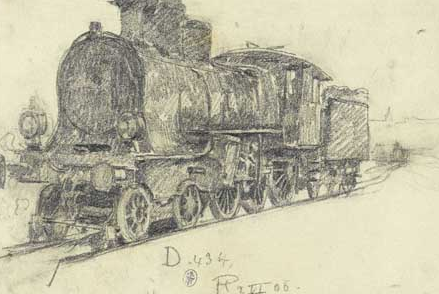
Dass die Mysterien der Gegenwart am Hauptbahnhof stattfinden ist nicht erst seit Beuys und Stuttgart 21 klar. Zu Beginn des zwanzigsten Jahrhunderts wurde er als Emanation des technischen Fortschritts und Brennpunkt großstädtischer Betriebsamkeit wahrgenommen, als Zentrum eines halluzinogenen “Reichs der Kraft.” So lautete der Titel einer populären Publikation von Artur Fürst von 1926, die im […]
-
Retraite De Constantine / Prise De Constantine
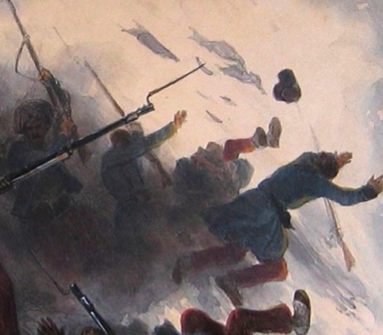
“Retraite de Constantine” was one of the most widespread examples of Auguste Raffet´s series of annual lithography albums. It was published in spring of 1837 by Gilhaut Freres and gives an account of the first failed attempts at conquering the Algerian fortress. The ignominious retreat of the French army in November 1836 was mainly blamed […]
-
“… The World Was Becoming Numerical.” Informationsgraphik und Kunst in den Kartenbildern von Dierk Schmidts “Die Teilung der Erde”
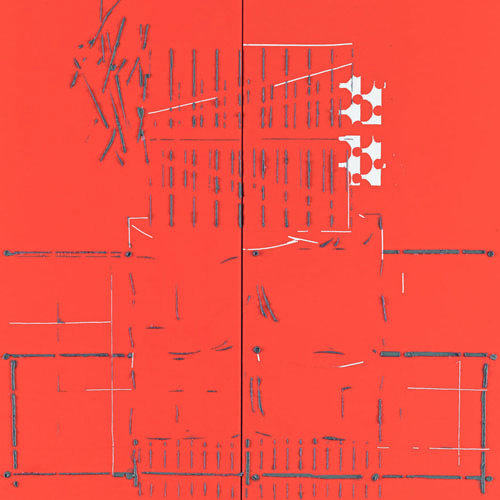
Informationsgraphik und Kunst in den Kartenbildern von Dierk Schmidts „Die Teilung der Erde“ Der Essay ist Teil der umfangreichen Projektdokumenation “Dierk Schmidt: The Division of the Earth – Tableaux on the Legal Synopses of the Berlin Africa Conference.” Edited by Lotte Arndt, Clemens Krümmel, Dierk Schmidt, Hemma Schmutz, Diethelm Stoller, Ulf Wuggenig, englisch / deutsch, […]
-
Ihlayel A.M. Megdad, Humsum 03.02.2009 , Krankenhaus Husum, Notaufnahme (“Enzyklopädie Personae”)
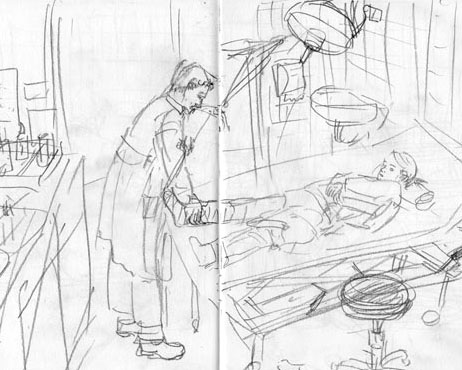
In this episode of her “Enzyklopädie Personae”- project Kyung-hwa Choi-Ahoi observes the daily routine of a physician in the emergency department of the city hospital Husum.
-
Kiowa drawings, a goldrush diary and an illustrated travelogue (Recommended by: Ben Katchor)
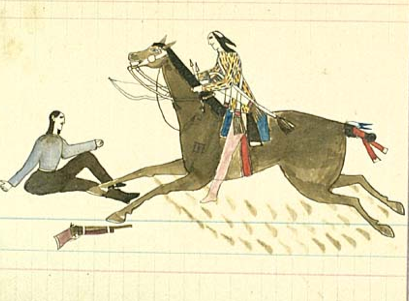
Nicht übersetzt: 16.6.2011 The Collections of the National Anthropological Archives and Human Studies Film Archives include the Smithsonian’s earliest attempts to document North American Indian cultures, begun in 1846. Among the earliest ethnographic collections are the diaries of John Wesley Powell, which recount his exploration of the Colorado and study of the region’s Indians, and the […]
-
Das Grauen, das aus Archiven kommt : “Kriegszeit” in Stuttgart (Ausstellungsbesprechnung)
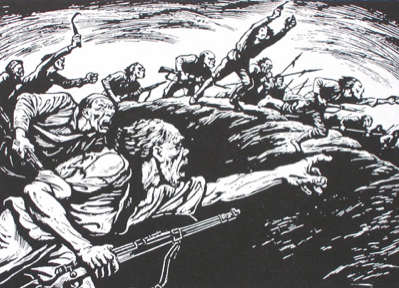
Offensichtlich wurde diese Kriegs – Ausstellung der Staatsgalerie Stuttgart um das reichhaltige Konvolut von exzellenten Grafiken und Originalzeichnungen von Käthe Kollwitz herum konzipiert, das sich in der hauseigenen Sammlung befindet. Mehr als ein Drittel der Ausstellungsfläche ist ihrem Werk gewidmet; darunter befinden sich auch die beiden grafischen Zyklen Ein Weberaufstand (1897) und Bauernkrieg (1904), mit […]
-
“Ich habe einen Maler mitgenommen” – Archäologen, Künstler, Zeichner und Fotografen im Grabungswesen
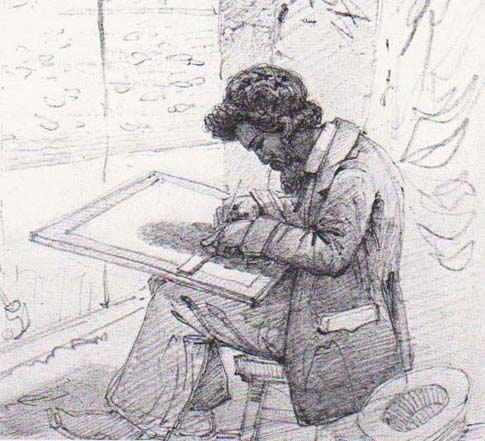
Nach einem Gespräch über Zeichnung und Archäologie, das 2006 im MePri stattgefunden hat, handelt es sich bei diesem eher historischen Beitrag um eine weitere Nachforschung über den Zusammenhang von Kunst, bildnerischer Dokumentation und Archäologie. I. Eine Grabung zeichnen In einer Zeichnungsserie über die archäologischen Grabungen am antiken Hügel von Munbaqa in Syrien habe ich versucht […]
-
Suzanne von Borsody, Hamburg 18.02.2009 , Ernst Deutsch Theater (Stück: Spurensuche) (“Enzyklopädie Personae”)
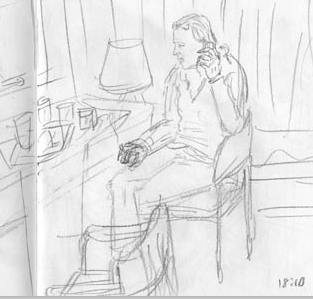
The series of drawings was made by the Korean artist Kyung-hwa Choi-Ahoi in the course of her “Enzyklopädie Personae”- project. Here she records the activities of the noted German actress Suzanne von Borsody behind the scenes of the Ernst Deutsch Theatre in Hamburg.
-
Graphic echolocations of societal relevant spaces – In conversation with Jan Rothuizen on his soft maps and reports.
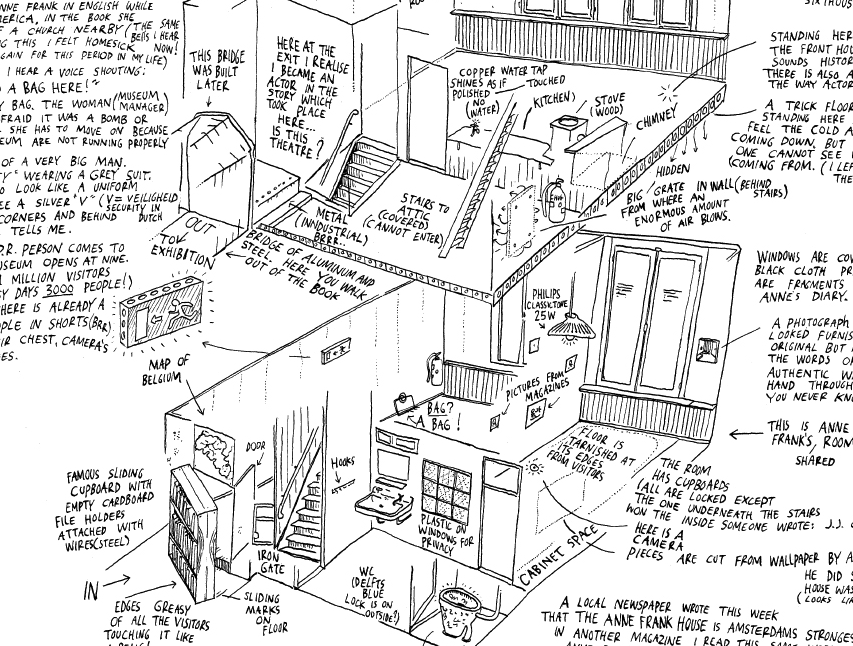
Nicht übersetzt: Dutch artist Jan Rothuizen has developed a very special and entertaining kind of topographical journalism, which allows him to leave the usual platforms of the art circuit behind. MePri: You have been making this kind of supra-factual or “soft”- cartographies since 2005 in various international megacities: Guangzhou, Cairo, Beirut and in your native […]
-
Recommended by Susan Turcot: Lili Rethi, organismic topographer (1894 -1971)
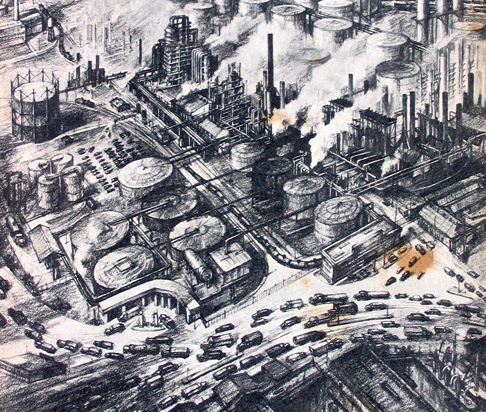
Nicht übersetzt: Much more than her precursor Joseph Pennell, young Viennese artist Lili Rethi was able to transform static architectural sites into energetic, vibrant organisms. The illustrations of the German version of Upton Sinclair´s Letters to Judd, an American Workingman (Briefe an einen Arbeiter, Leipzig- Wien 1932) already revealed her specific talent to praise the […]