-
Me too in Verdun # 2 – On the Views and Drawings of the War Traveller Goethe.
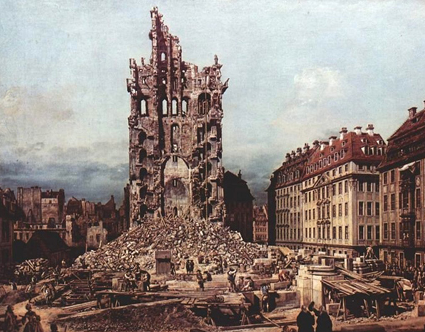
II) The Old Empire Strikes Back Just a few months after the disastrous end of the campaign against France, Goethe once again functioned as a monarchist campaign propagandist – this time in putting down the Mainzer Republik, the first democratic state on German soil, which had been established with the support of the French revolutionary […]
-
Me too in Verdun # 1. On the Views and Drawings of the War Traveller Goethe.
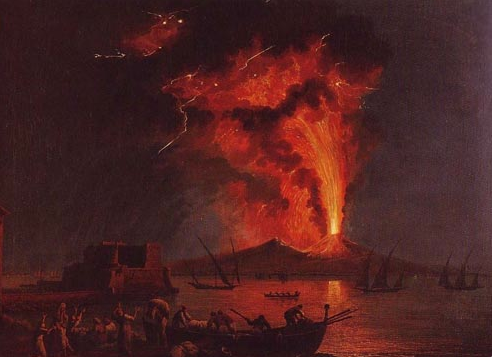
I) The Campaign Against the New Insanity Was Goethe a war artist? The first section of the three-part historical essay, which sheds light on the drawing activities of the poet in connection with his political endeavours, focuses on his participation in the campaign of the monarchist First Coalition against revolutionary France in 1792. Only thirty […]
-
William James Linton´s teaching piece “Cetewayo and Dean Stanley” (1880) – with an introduction by Alexander Roob
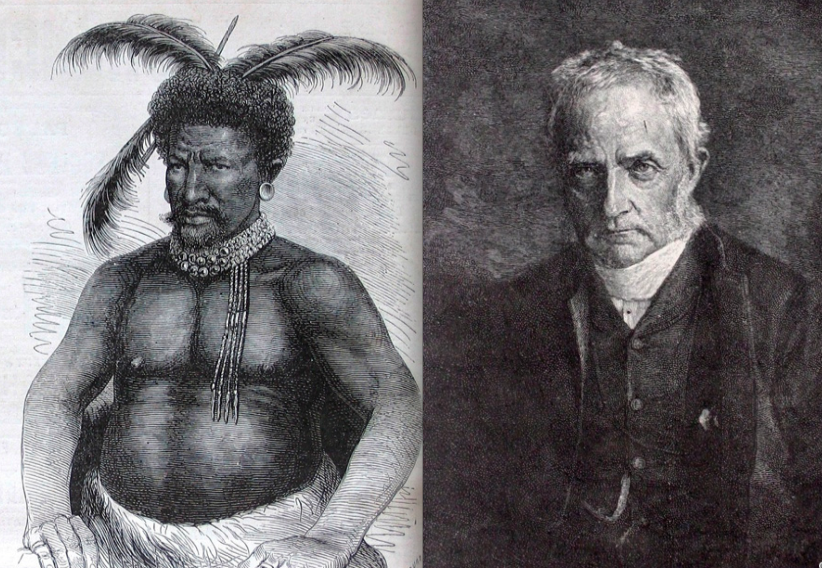
Lintoniana IV “History will speak of me.” – On Linton’s colonial-critical dialogue William James Linton grasped himself foremost as a political artist. In the biographical appendix of the compilation of lyrics, English Verse. Lyrics of the 19th Century, which he edited in 1883 together with the renowned literary critic Richard Henry Stoddard, he left no […]
-
Cham, the “popular” Caricaturist [
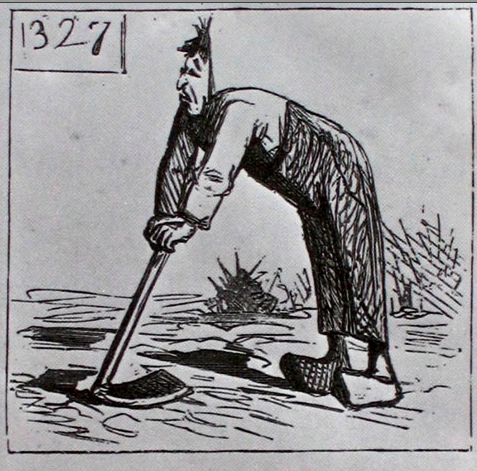
Daumier Again. The following survey by David Kunzle contrasts Daumier’s career with that of the then much more popular Amédée de Noé, who was known under his penname Cham. He was ten years younger and a disciple of Daumier’s role model, the tragically underrated Nicolas-Toussaint Charlet, who was banned by Baudelaire from the pantheon of […]
-
Ein Münchner im Milljöh. “Berliner Bilder” von Karl Arnold
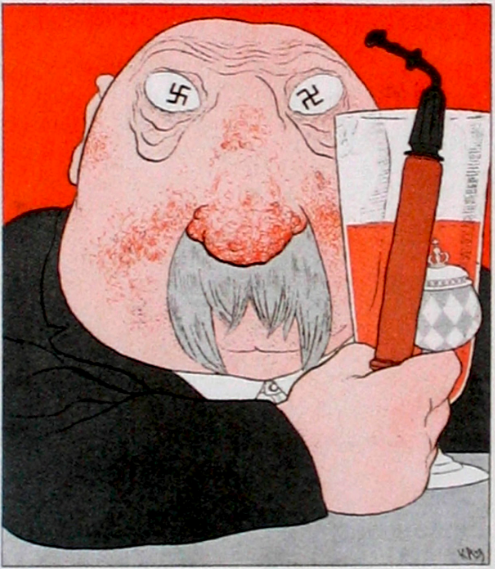
Not translated: Seit 1921 betätigte sich Karl Arnold, einer der Hauptzeichner und Miteigner des Münchner Satiremagazins Simplicissimus, als Chronist des “wilden” Lebens in der preußischen Metropole. Seine Berliner Bilder erschienen in unregelmäßiger Folge und brachten es auf insgesamt 48 Blatt. Mit der Publikation eines gleichnamigen Sammelbandes hatte die Reihe dann 1924 auch ihren Abschluß gefunden. […]
-
Recommended by Susan Turcot: Lili Rethi, organismic topographer (1894 -1971)
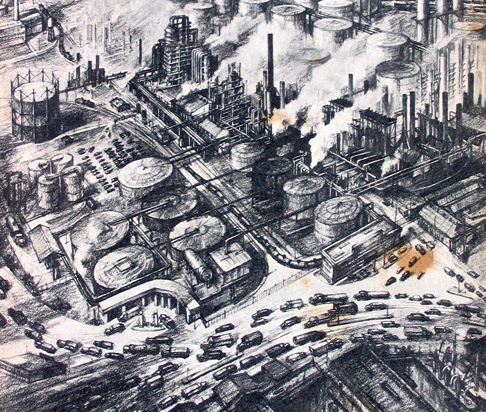
Much more than her precursor Joseph Pennell, young Viennese artist Lili Rethi was able to transform static architectural sites into energetic, vibrant organisms. The illustrations of the German version of Upton Sinclair´s Letters to Judd, an American Workingman (Briefe an einen Arbeiter, Leipzig- Wien 1932) already revealed her specific talent to praise the processes and […]
-
Illustration & Avantgarde (MePri-News 18/5/08 – 4/6/10)
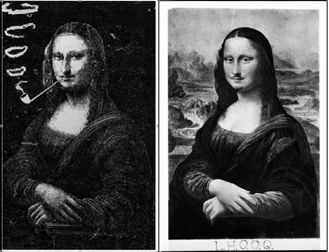
18/5/08 Annabelle Görgen: Antihaltung mit System: Die Arts Incohérents. Eine vergessene Kunst und die Folgen. MePri-Lecture #14 Das surrealistische Verfahren der poetischen Zündung, die Methode der Kombinatorik, und der häufig sprachspielerische und schwarze Humor erhalten durch die Erforschung einer wenig bekannten Pariser Künstlergruppe des späten 19. Jahrhunderts einen neuen historischen Hintergrund: Die Arts incohérents waren […]
-
Against Daumier. A Revision of Early French Caricature and Social Graphics
-abridged version- L’imagination au pouvoir – Imagination to power (Charles Fourier) One has settled down comfortably with Honoré Daumier. “There is hardly another artist who has become such an epitome of an entire art genre,” (1) Thomas Gaehtgens wrote in his text on the French illustrator published in 1979, and what he meant was the […]
-
Melchior Lorck: Precursor of the “specials”
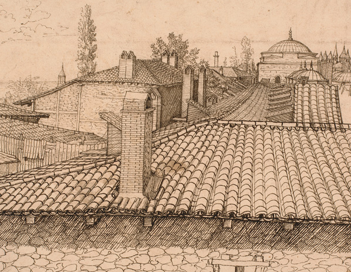
New Release The projected monumental five-volume set (four of them are available now) by Erik Fischer is the first extensive monographic treatment of one of the most interesting artists of the 16th Century. Melchior Lorck, or Lorch, originally Loris, born in 1526/27 in the former Danish Flensburg, was a contemporary of Pieter Breugel the Elder […]
-
Ronald Searle, Fugitive
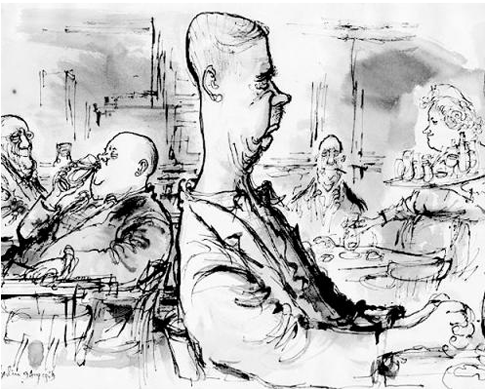
Among the many voices that paid homage to the ninty-years old cartoonist Ronald Searle, the one of film director Mike Leigh protrudes. In an essay published by Daily Telegraph Leigh, who is noted for his experimental methods of achieving realism in film, explains, how a book of cartoons, given to him at the age of […]