-
“Vogelmen Diaries” – Exhibition film and related archive articles (Melton Prior Institute im Heidelberger Kunstverein, 17.11.2012 – 27.1.2013)
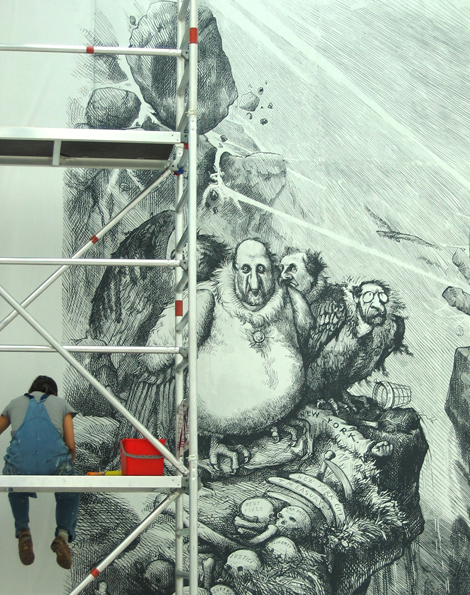
Exhibition Film. Click on the image to play. . Fletcher DuBois performs the “Vogelmen Diaries” at the opening. Main Hall, Southern Wall: Thomas Nast, “Our System of Feathering Nests ..” Main Hall, Northern Wall: Thomas Nast, “Let Us Prey!” > Faits Divers – Illustrations: Crashes and Collapses > Thomas Nast: “Dead Men´s Clothes Soon Wear […]
-
Sketches from the moor
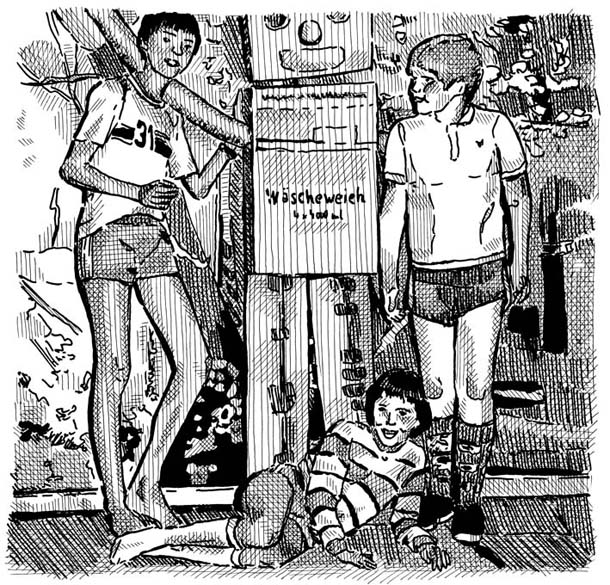
This Pictorial consists of a compilation of drawings that either did not find their way into Oliver Grajewski’s graphic novel “Der Tag im Moor” or found their way into it in a different form. The drawings are loosely arranged in the order of the narrated chapters. Ink and pencil drawings combine with digital photography and […]
-
A Thomas Nast – Gallery (His career in 38 images)
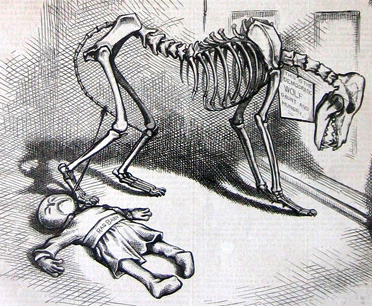
Thomas Nast (1840-1902) started his career as a “special artist” at the age of fifteen. His pictorial journalism marked the peak of graphic art as far as its influence and popularity in the 19th century is concerned. No artist was ever more successful in regard to the intensity, scope and lastingness of his political impact […]
-
Defiant People. Drawings of Greece Today, London 1952
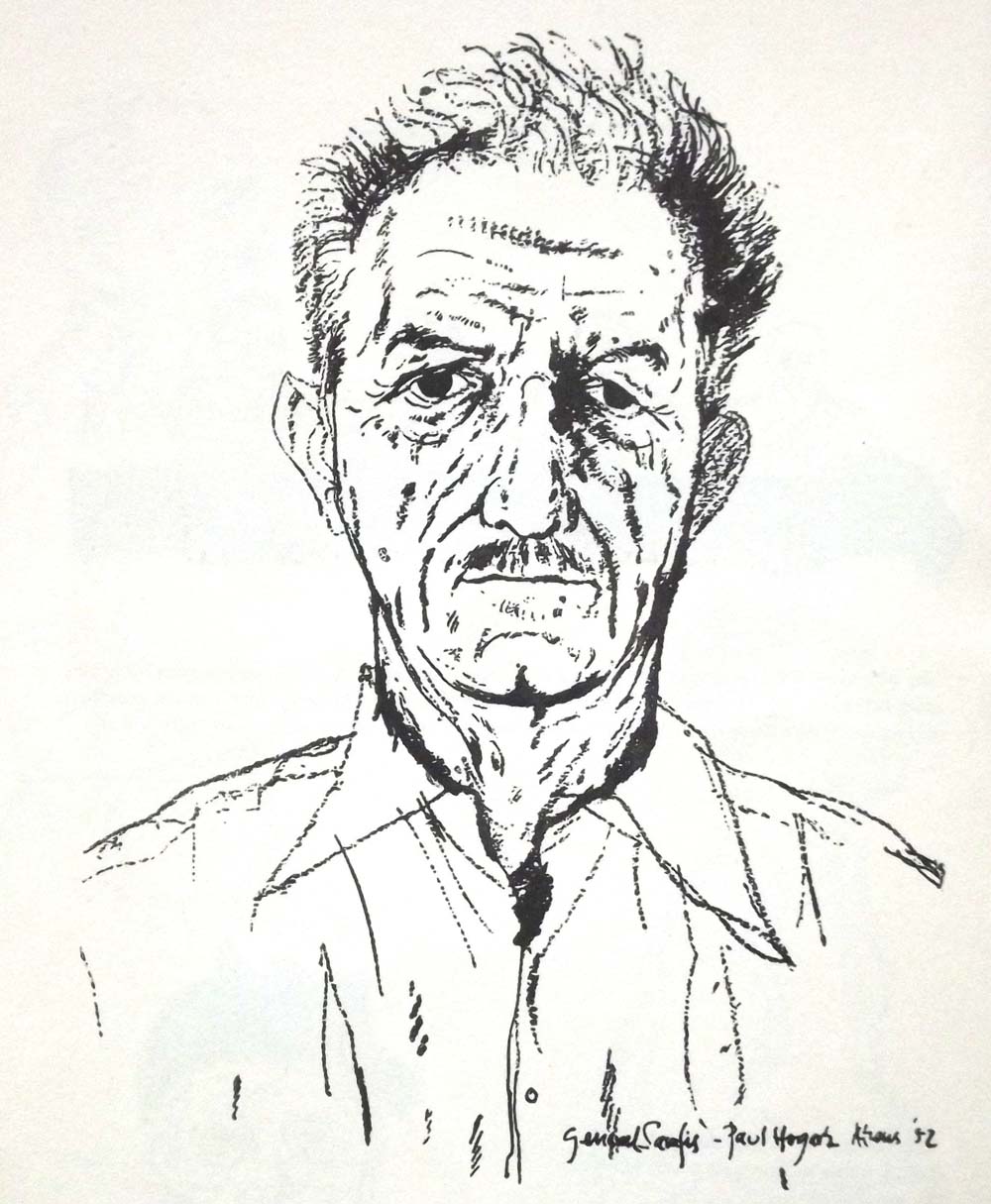
“Fate intervened in the person of Betty Ambatielos, the indomitable Welsh schoolteacher wife of Tony Ambatielos, a prominent Greek Communist leader who faced execution by the regime of Marshall Papagos which ruled Greece in those days. I was asked to depict his trial against the background of Greece itself, the first victim of the Cold […]
-
Gabriel Campanario and the Art of Locational Sketching (MePri- News)
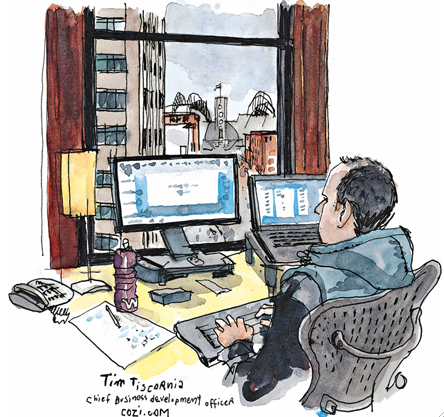
Gabriel Campanario is one of the most distinguished and prolific contemporary special artists, combining visual and written journalism. His career spans two decades, working for newspapers in Barcelona, Lisbon, California, and Virginia. At present he is working as a staff artist, at The Seattle Times, where he is publishing the very lively weekly column “Seattle […]
-
Approaches between Palestine and Rio de Janeiro. Some reflections on comic journalism.
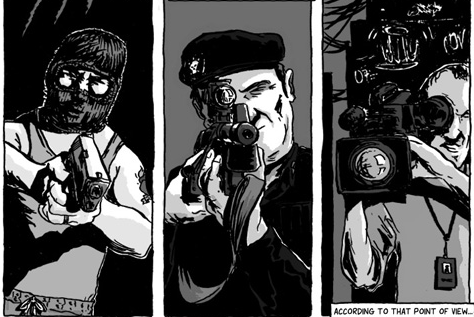
Since I read Joe Sacco’s Palestine Special Edition, and its preface entitled ‘Some reflections on Palestine’, in which the author explains the process of producing the masterpiece of his youth, I started to wonder about the relation between Sacco’s comics and my own work. But there is another circumstance. When Sacco came to Brazil in […]
-
Tiger Hunting with the Shah. A Golden Era of Visual Journalism.
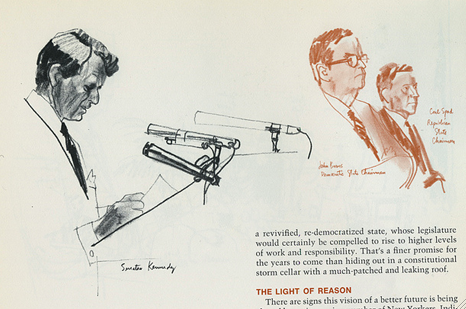
Daniel Zalkus, a renowned illustrator, who himself works as an artist-reporter from time to time, has put together an excellent commented series of historical drawings on-the–spot, representing a golden era of graphic reportage in the American magazines from the 1950’s and 60’s. Zalkus´ series Visual Journalism. The Artist as Reporter was publised recently in five […]
-
Death in the Shadows. “Black.Light Project”
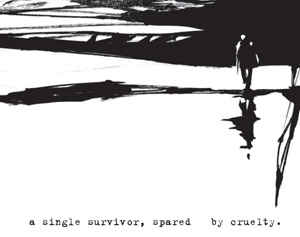
The Black.Light project, which was initiated by war photographer Wolf Boewig and his companion, the travel writer Pedro Rosa Mendes, togehter with the graphic designers Henning Ahlers and Christopher Ermisch, is in many respects an adventurous one and, when it comes to openness and extension, without precedent: Ten comic artists, which are renowned for their fictitious work […]
-
Comics as reports, a selection #2
29/2/12 Kairo-Reportage von Olivier Kugler In der neuen Printausgabe der Wochenzeitung Der Freitag erscheint eine Kairo-Reportage des in London lebenden Zeichners Olivier Kugler. Kugler hatte jüngst drei Wochen dort verbracht und neben dem Jahrestag der aegyptischen Revolution auf dem Tahrir Platz auch die blutigen Ausschreitungen rund ums Innenministerium (nach dem Desaster im Fussballstadion von Port […]
-
Viktoria Lomasko’s Russian Graphic Novel “Forbidden Art”

Not translated: Russland galt lange Zeit als eine Nation von Bücherwürmern. Menschen mit dicken Klassikern der russischen Literatur unter dem Arm prägten das Stadtbild, selbst in der vollen Metro konnte man ihnen begegnen. Verlage brachten ihre Bücher in Millionenauflage heraus und durften auf ein treues Lesepublikum vertrauen. Auch die bildende Kunst hatte ihren Platz im […]