-
Wild Apollo’s Arrows. An illustrated introduction I

I Classic / Anti-Classic Decades before the French Revolution, a culture of intoxicating affects burst into the heyday of the Enlightenment, increasingly boosted by national-mythical and folkloristic enthusiasm. The cultural philosopher Johann Gottfried Herder compared its impact to the epidemic projectiles that marked the beginning of Homer’s battle epic Iliad. Terms such as the ‘Age […]
-
Wild Apollo’s Arrows. An illustrated introduction II

III Blind Visionaries –True Homers Paintings Gallery The dismantling of noble Homer had already begun in the 1730s, in the cultural-anthropological milieu of the Scottish Enlightenment, which was characterised by approaches based on early cognitive science and evolutionary theory. The atavistic portrait bust, which on a self-portrait of the Edinburgh barber and graphical chronicler John […]
-
Wild Apollo’s Arrows. An illustrated introduction III

V Companionship of the Afterlife. Departure to the Past Exhibit Gallery The mesmerist influence on the Romantic generation was highlighted ideal-typically by several heads of a book of portraits that Julius Schnorr von Carolsfeld, a main proponent of the Brotherhood of St Luke, created between 1816 and 1824 in Rome. Their gazes to the afterlife […]
-
Exhibition: Wild Apollo`s Arrows. Klopstock Cult & Ossian Fever / Die Pfeile des wilden Apollo. Klopstockkult & Ossianfieber

An exhibition of the Art Collections of the Academy of Fine Arts Vienna in co-operation with the Exhibit Gallery, curated by Alexander Roob 7.3.–25.5.2025 Paintings Gallery of the Academy of Fine Arts Vienna, Schillerplatz 3, 1st floor, 1010 Vienna Opening: 6.3.2025, 19–22 h Opening hours Daily except Monday: 10–18 h Song recital with lesson: Atelierhaus, […]
-
Evil Empires II: British Images , 48 political drawings, Berlin 1943
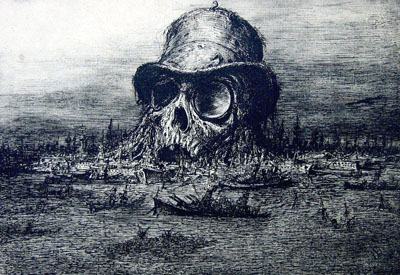
The works of Thuringian graphic artist A. Paul Weber were strongly influenced by the visionary imaginations of Alfred Kubin. In his main work, the graphic cycle “British images”, published in 1941, influences from Gustave Doré´s “London Pilgrimage” can be traced, as well as of those of other French illustrators such as Théophile Steinlen, Charles Léandre […]
-
The Translation of the Arch-Imperator , (H. Durand-Brager: Sainte-Hélène, 1844 / C. N. Lemercier: Translation du corps de Napoleon, ca.1842)
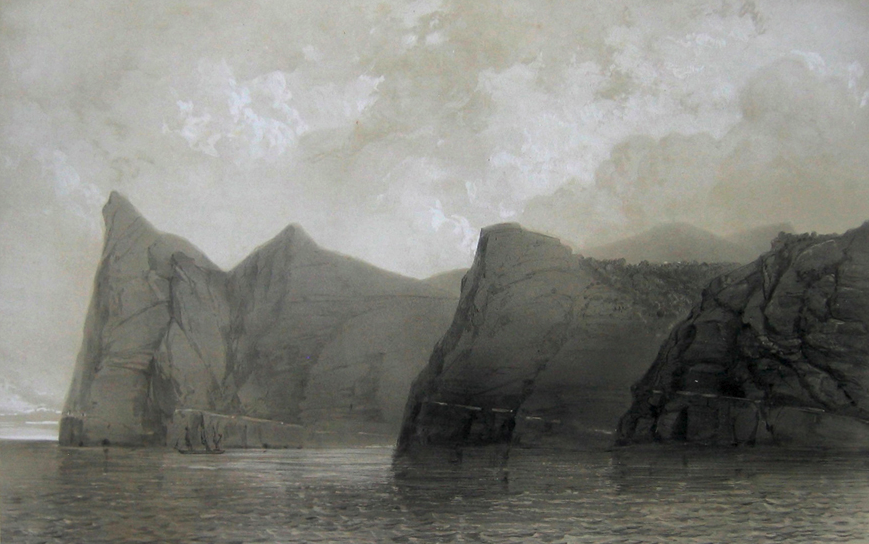
Special Artist Henri Durand-Brager had made a name for himself with an opulent documentation of the return of the remains of Napoleon I from foreign, British occupied soil to his homeland. Brager´s expedition report Sainte-Hélène was published in an impressive folio format in 1844. What is remarkable, is that the cycle completely disregards the actual […]
-
Infinite Spaces. On William James Linton´s Vignette Art
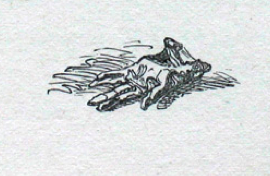
Lintoniana VIII Infinite Spaces. On William James Linton’s Vignette Art “With the separation of draftsman and engraver began the decline of engraving as an art (…) began a system of special employment; and having to depend on draftsmen, engravers ceased to draw, ceased to rely on themselves. Wanting the wider power, the enevitable course was […]
-
Rebellious Landscapes – William James Linton´s art of graphic Macchia.
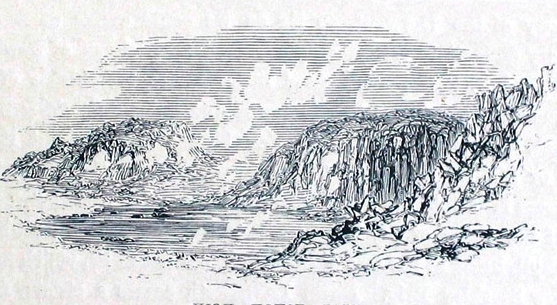
Lintoniana VI What had laid the foundations for Linton’s reputation as a leading proponent of artistic xylography in the 19th century was the extraordinary intensity of his landscape depictions and the graphic freedom that he allowed himself to this end. The apex of his decade-long landscape work was marked in the mid 1860s by the […]
-
On the Cadaver of the Father of Supranationality. – A further reading of Linton´s “Cetewayo and Dean Stanley” Conversation
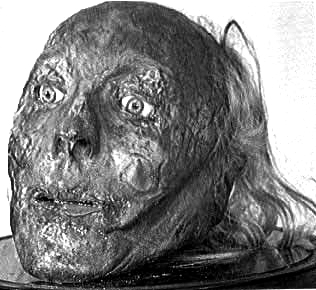
Lintoniana V “Never did corpse of hero on the battle-field, (…) exite such emotions as the stern simplicity of that hour, in which the principle of utility triumphed over the imagination and the heart.“ (The Monthly Repository, 1832) What did Linton actually mean when, at the end of his conversation piece Cetewayo and Dean Stanley, […]
-
Me too in Verdun # 3 – On the Views and Drawings of the War Traveller Goethe.
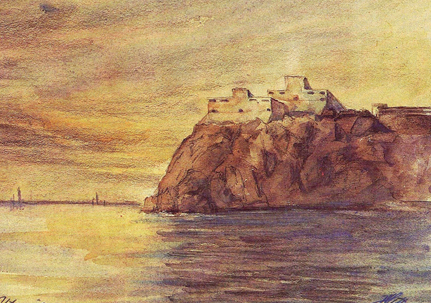
3) Verdun revisited In the circles of specialists in German studies, the political Goethe is regarded as “difficult”. His ambitions in this regard are often treated as fringe problem zones that can be neglected within the monumental, aesthetic whole comprised of creative writing and natural science, which one is accustomed to admiring him for. What […]