-
John Thomas Smith and the Invention of Investigative Social Reportage I: Real Views
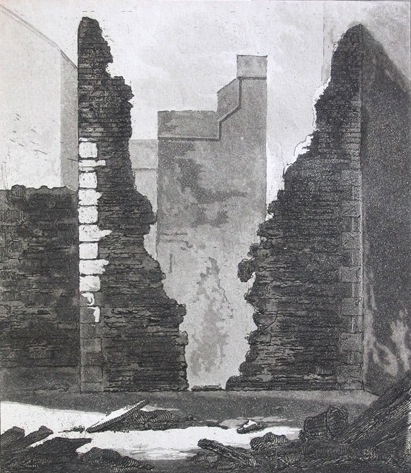
Abriged version. For footnotes please see the more detailed German version. – 1) Introduction – 2) Real views 1) Introduction The beginnings of investigative social reportage are usually sought in the Victorian age, in the 1840s, the founding period of illustrated magazines dedicated to daily politics. But graphic social journalism had already been formulated decades […]
-
Porter / Re-porter: Blake revisited (Exhibition)
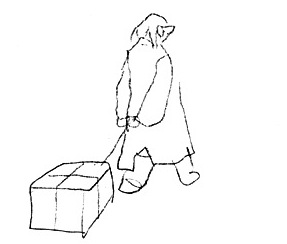
In the exhibition Porter/Re-porter, on view from 4 May to 22 September in the frame of “Cube. Sparda Art Award” at the Kunstmuseum Stuttgart, Alexander Roob combines materials from the collection of the Melton Prior Institute with works of his own, including a longer excerpt from the eponymous CS drawing series created in London in […]
-
Henri Durand-Brager, Special artist of Bonapartism
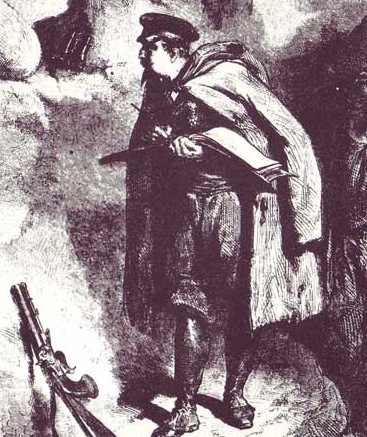
“The eyes of the world are upon us! … Misfortune has its heroism and its fame.” (Napoleon Bonaparte, St. Helena, Nov. 1815) “The Napoleonic idea broke forth from St. Helena like the moral doctrine of the Gospel, which had risen, certain of victory, from the agonies of the Calvary.” (Louis-Napoleon Bonaparte, L´Idée Napoléonienne, 1840) In […]
-
Illustration expanded. William James Linton: Bob Thin or the Poorhouse Fugitive. London, 1840- 45
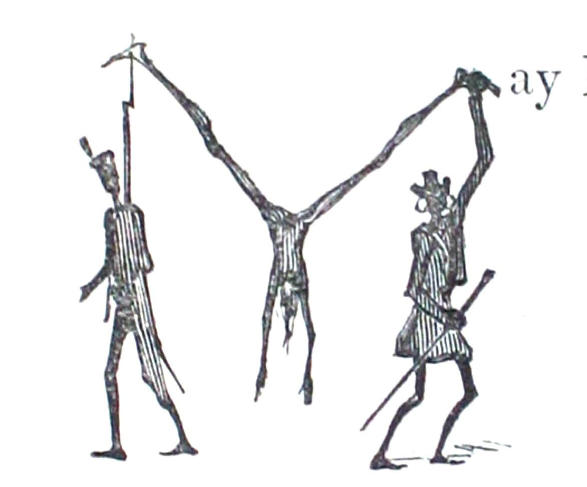
Lintoniana III “Men like no prosy tales: we’ll try How doggrel rhyme fits history.” The MePri-Collection holds four different copies of Linton’s groundbreaking social poem in which he accuses the afflictions caused by the inhuman legislation for the poor. “This poem established Linton as a peoples poet and became part of the repertoire of radical […]
-
Van Goghs Favorites IV: Paul Renouard, the Zola of Drawing
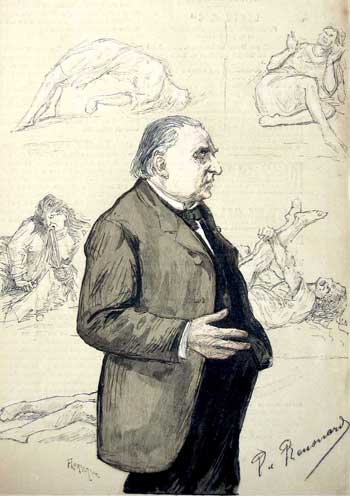
“There is life in every little pencil stroke.” Letter from Vincent van Gogh to Theo van Gogh Nuenen, 4 or 5 May 1885 “When I think how he rose to such a height by working from the very beginning from nature, without imitating others, and how he is none the less in harmony with the […]
-
Van Goghs Favorites II: Hubert Herkomer and the School of English Social Realism
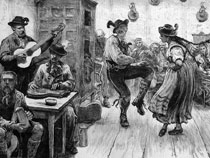
“There is something virile in it – something rugged – which attracts me strongly (…) In all these fellows I see an energy, a determination and a free, healthy, cheerful spirit that animate me. And in their work there is something lofty and dignified – even when they draw a dunghill.” Vincent van Gogh, October […]
-
Van Goghs Favorites I: Xylographism unbound – The influence of illustrated journal graphics on the art of Vincent van Gogh.
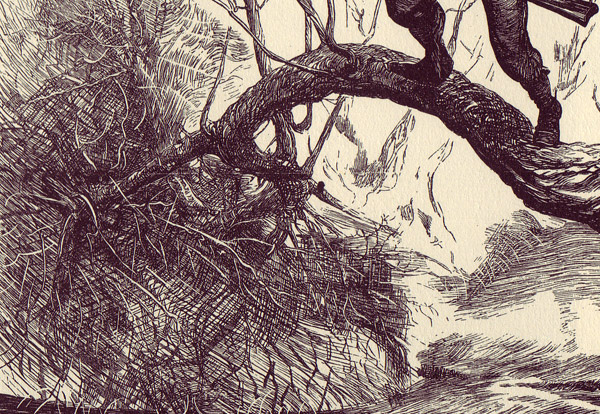
Only in recent years has one gained the insight that Vincent van Gogh was not only a collector of Japanese graphic prints, like many of his artist colleagues, but was also imbued by a passion for the pictorial art of illustrated journals of his times. This was mainly thanks to two exhibitions: One, in spring […]