-
Vogelmen Diaries – Melton Prior Institut presents “special artists” (Exhibition)
Mit „Vogelmen Diaries” wird erstmalig die breite Forschungsarbeit des Melton Prior Instituts auf dem Gebiet der Reportagezeichnung im Rahmen einer Ausstellung vorgestellt. Zentrales Thema ist das zukunftsweisende künstlerische Selbstverständnis vieler früher Pressegrafiker. Die multiplen Rollen, die sie einnahmen, changierten zwischen nüchterner grafischer Berichterstattung, karikaturesker Polemik und fiktionaler Illustrationskunst. Viele waren auch, wie z.b. der einflussreiche […]
-
“Confound the Line” – Photo-Graphics of the New School of Wood Engraving (Exhibition)
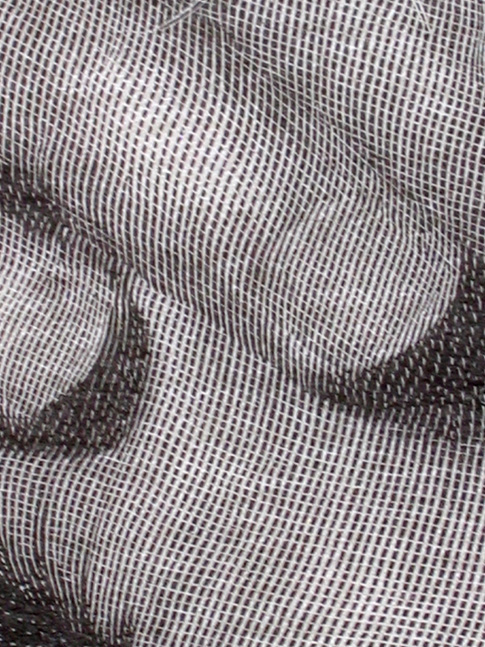
“With the new school nothing is theoretically impossible, and no means are illegitimate.” (Frederick Juengling, 1880) Wood engraving, actually a product of early English Romanticism, experienced its breakthrough with the rise of the illustrated press. Its phenomenal success owed to its hybridity, for it combined the fine mechanical quality of copper engraving with the advantages […]
-
Tiger Hunting with the Shah. A Golden Era of Visual Journalism.
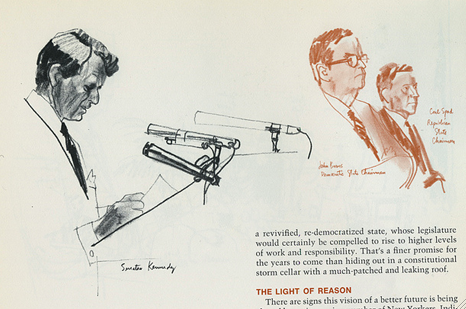
Daniel Zalkus, a renowned illustrator, who himself works as an artist-reporter from time to time, has put together an excellent commented series of historical drawings on-the–spot, representing a golden era of graphic reportage in the American magazines from the 1950’s and 60’s. Zalkus´ series Visual Journalism. The Artist as Reporter was publised recently in five […]
-
Corrupted States of Plutocracy. W.J. Linton´s North America – Cycle.
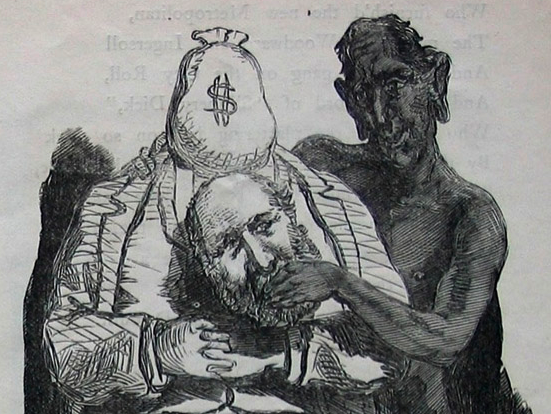
Lintoniana IX God send the Indian luck! / Success to the buck! / May his scalps be many and quick! / Guard his war, O Lord! through the thick / Of his foes! Give him luck! (W.J. Linton, 1871) In 1866 William James Linton moved to New York because, as he confessed in his autobiography, […]
-
Infinite Spaces. On William James Linton´s Vignette Art
Lintoniana VIII Infinite Spaces. On William James Linton’s Vignette Art “With the separation of draftsman and engraver began the decline of engraving as an art (…) began a system of special employment; and having to depend on draftsmen, engravers ceased to draw, ceased to rely on themselves. Wanting the wider power, the enevitable course was […]
-
der stein nr. 1
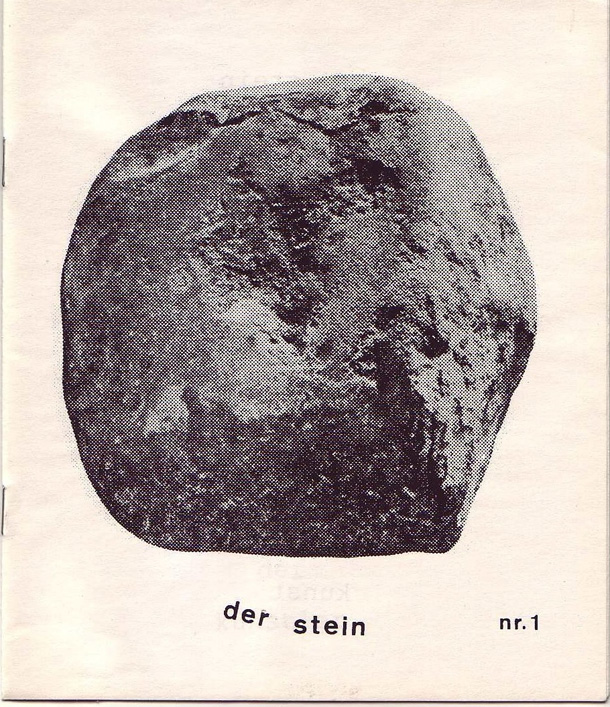
In the late 1990s Canadian cartoonist Julie Doucet abandoned the medium of comic books and went back to printing. Woodcuts, linocuts, silkscreen printing, followed by an abundant production of artist’s books. “Der Stein” is one of the most incisive and enduring examples of contemporary private press or fanzine culture. It is written in bad German […]
-
Robert Weaver VII: The Woolworth – Motion
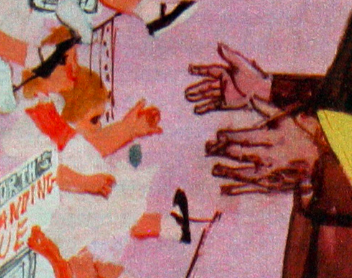
What´s Come Over Old Woolworth? (Fortune, January 1969) “There are assignments for `Fortune´, where I am realistically and symbolically going up the corporate ladder at Woolworth´s. It starts with the stockboy, and I use chairs as a metaphor for power. The chairs become more and more elaborate as we go to top. The drawings where […]
-
Saul Leiter and Robert Weaver, an artistic dialogue
„We shared a lot of ideas and we liked a lot of the same things. (…) We had quite a bit in common beside from the fact that we were friends.“ (Saul Leiter) I: Street Scenes in Slumberland. II: On Robert Weaver. Alexander Roob in conversation with Saul Leiter. III: Robert Weaver: The Vogelman Diary […]
-
William James Linton – A Life in the Collections
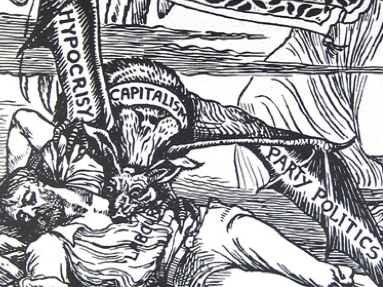
On the Formations of Political Art and Wood Engraving William James Linton has left behind an immense body of artistic work. He executed thousands of commissioned and autonomously conceived engravings, a number of paintings and watercolours; moreover, he served as editor to several journals, ran his own private presses, contributed hundreds of poems and polemics […]
-
Rebellious Landscapes – William James Linton´s art of graphic Macchia.
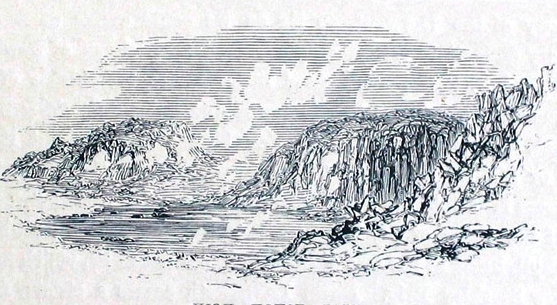
Lintoniana VI What had laid the foundations for Linton’s reputation as a leading proponent of artistic xylography in the 19th century was the extraordinary intensity of his landscape depictions and the graphic freedom that he allowed himself to this end. The apex of his decade-long landscape work was marked in the mid 1860s by the […]