-
Rebellious Landscapes – William James Linton´s art of graphic Macchia.
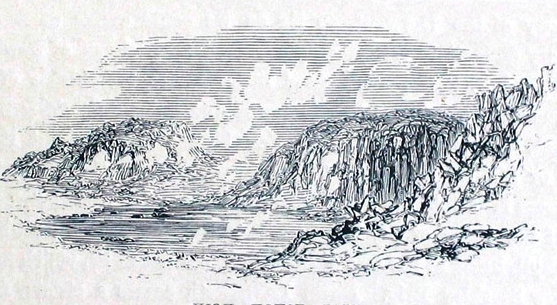
Lintoniana VI What had laid the foundations for Linton’s reputation as a leading proponent of artistic xylography in the 19th century was the extraordinary intensity of his landscape depictions and the graphic freedom that he allowed himself to this end. The apex of his decade-long landscape work was marked in the mid 1860s by the […]
-
On the Cadaver of the Father of Supranationality. – A further reading of Linton´s “Cetewayo and Dean Stanley” Conversation
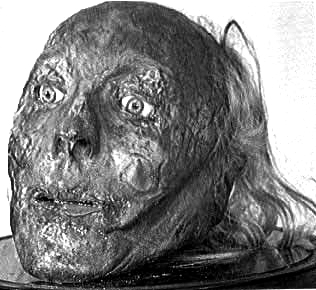
Lintoniana V “Never did corpse of hero on the battle-field, (…) exite such emotions as the stern simplicity of that hour, in which the principle of utility triumphed over the imagination and the heart.“ (The Monthly Repository, 1832) What did Linton actually mean when, at the end of his conversation piece Cetewayo and Dean Stanley, […]
-
Robert Weaver VI: Book Illustrations
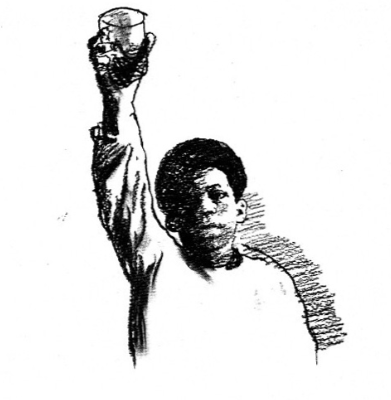
“Weaver established the idea of the draughtsman being an equal to the writer of the text. He should have had a great influence on the world of text and image publishing, but for the most part, art directors and editors did not demand the kind of picture-writing that Weaver had in mind. In fact, few […]
-
William James Linton´s teaching piece “Cetewayo and Dean Stanley” (1880) – with an introduction by Alexander Roob
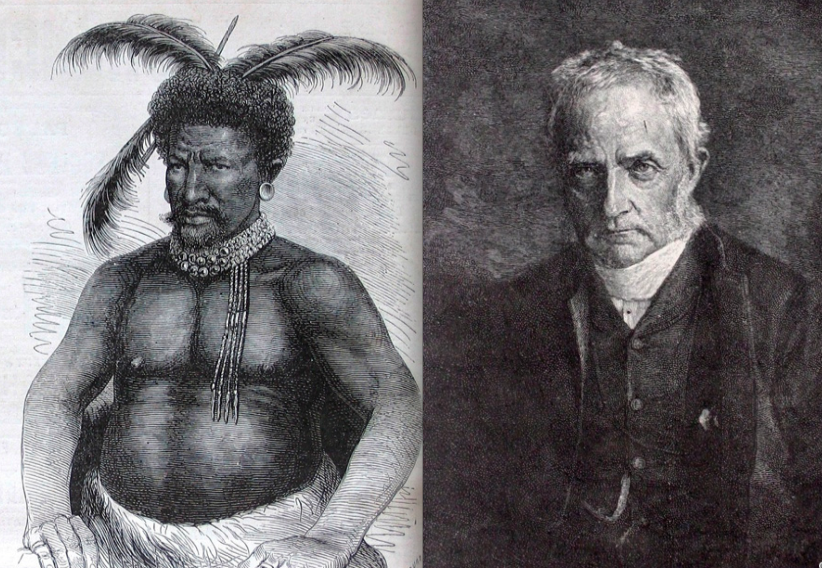
Lintoniana IV “History will speak of me.” – On Linton’s colonial-critical dialogue William James Linton grasped himself foremost as a political artist. In the biographical appendix of the compilation of lyrics, English Verse. Lyrics of the 19th Century, which he edited in 1883 together with the renowned literary critic Richard Henry Stoddard, he left no […]
-
Robert Weaver V: Industrial Scenes II
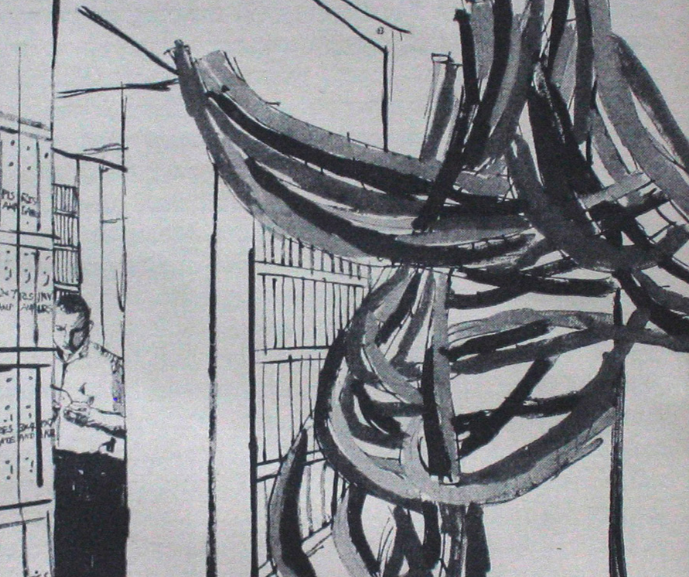
The image of “Fortune” was deeply connected with a specific artistic American tradition of Social Realism. The Magazine was founded in 1939, in the era of the Great Depression and an art director like Leo Lionni, who was resonsible for the appearence of the magazine from 1940 on,updated this specific ethos by engaging illustrators like […]
-
Robert Weaver IV: Industrial Scenes I
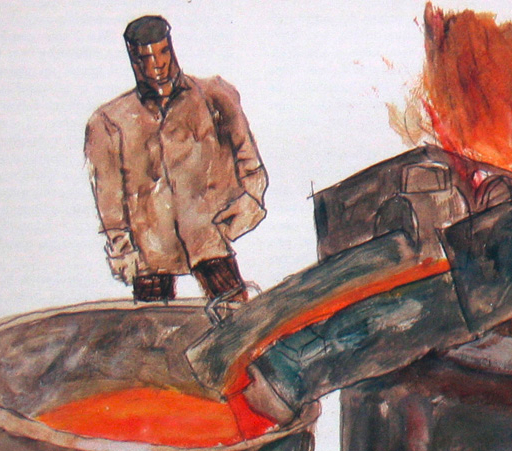
From the mid-fifties on, Robert Weaver made constant contributions to the famous business magazine “Fortune”. “Fortune” kept a long tradition of brillant visual documentaries of industrial themes provided by artists like Walker Evans, Philip Guston, Robert Matta, Ben Shahn or Diego Rivera.
-
Robert Weaver III: Kennedy´s Last Chance to be President , Esquire Magazine. April, 1959
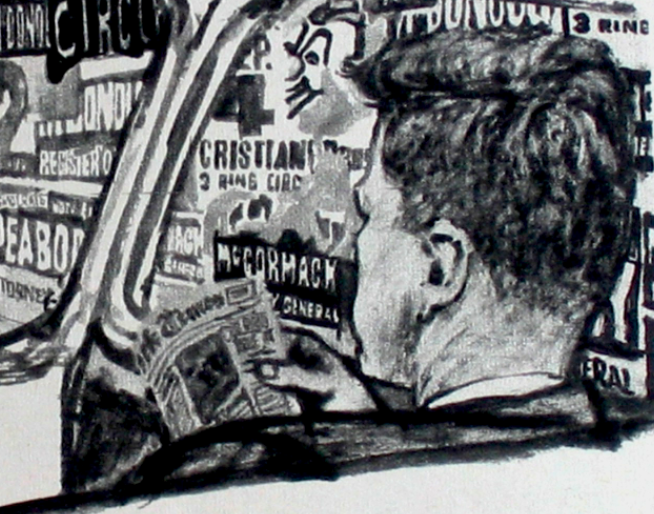
In the end of 1958 famous graphic artist Robert Weaver was commissioned by the “Esquire Magazine” to accompany the Senate re-election campaign of John F. Kennedy with his sketch-pad and his pencil. As usual Weaver reworked his hasty, but very decided sketches later in his studio. The striking drawing, showing J.F.K. from behind in his […]
-
Illustration expanded. William James Linton: Bob Thin or the Poorhouse Fugitive. London, 1840- 45
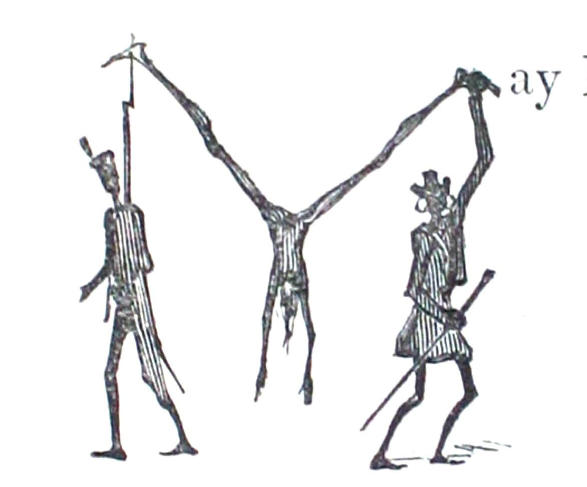
Lintoniana III “Men like no prosy tales: we’ll try How doggrel rhyme fits history.” The MePri-Collection holds four different copies of Linton’s groundbreaking social poem in which he accuses the afflictions caused by the inhuman legislation for the poor. “This poem established Linton as a peoples poet and became part of the repertoire of radical […]
-
TAUCHFAHRTEN Exhibition Catalogue
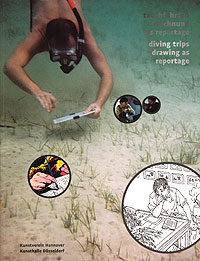
Exhibition Catalogue TAUCHFAHRTEN (DIVING TRIPS) Drawing as Reportage Edited by Stephan Berg, Kunstverein Hannover; Ulrike Groos, Kunsthalle Düsseldorf. With texts by Michael Glasmeier, Karin Gludovatz, Clemens Krümmel, Joachim Rees, Alexander Roob (ger./engl.). Softcover, 232 p., with 420 mostly colored illustrations. Richter Verlag, ISBN 3-937572-15-5 Bookstore, ISBN 3-937572-17-1 THE CATALOGUE IS NO LONGER AVAILABLE BUT CAN […]
-
Art or Craft. William James Linton vs. William Morris. A posthumous dispute.
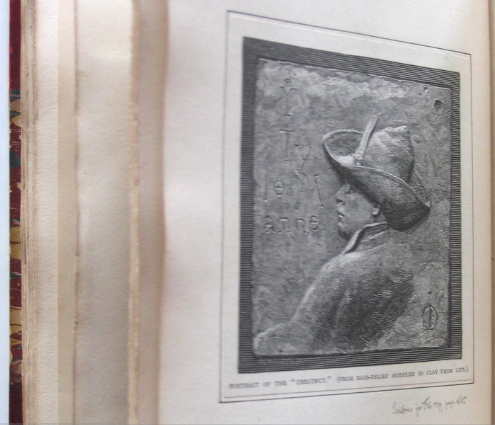
The MePri Collection holds a wondrous scrapbook on wood engraving, affectionately combined and carefully lettered. The object was offered by a seller of autographs and announced as follows: “An autographed letter by William James Linton signed, to William Abercrombie, discussing his books, saying there is no large paper copy of the Hints. [on Wood-Engraving]. Tipped […]