-
Drawn Reports for Life – by Thomas Hart Benton, William Sharp, Franklin McMahon, and Ronald Searle
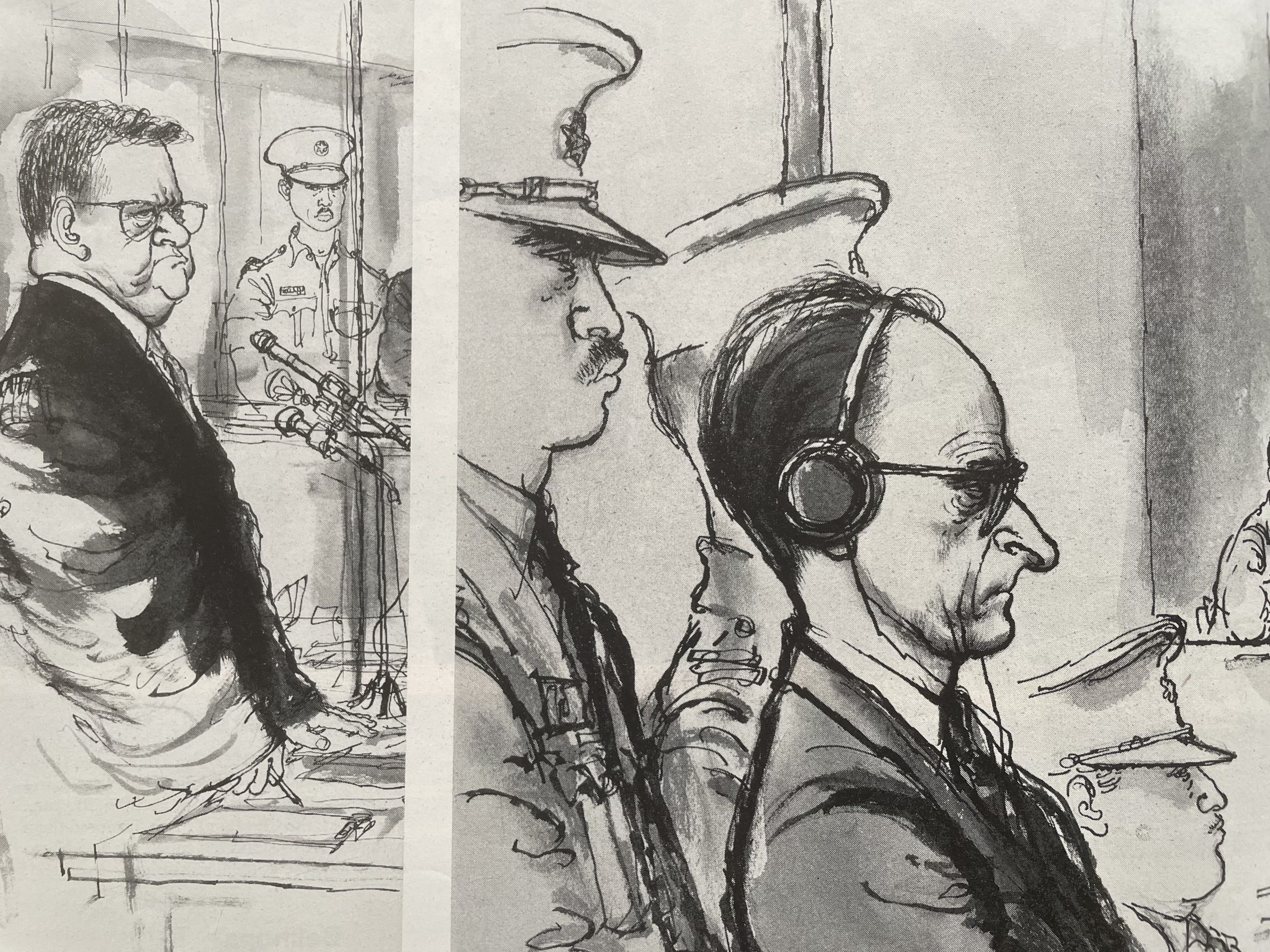
Selected drawn reports for Life, produced between 1937 and 1961: the Cold War, spectacular trials, media hype. Life, July 26, 1937 : American Regionalist Thomas Hart Benton, later known as Jackson Pollock’s teacher, took on the role of reportage artist in Michigan. In brush-and-ink sketches for Life, he depicted what he labeled “menaces to democracy”: communists, […]
-
Adam in Oraibi – Wild Apollo’s Arrows Add. I

CS: New Series. A first visual essay in the wake of the Wild Apollo’s Arrows project. What happened after the Ossianists discovered the descendants of their wild Homer among the North American tribes and Blake identified their shamans as visionary Ezekiels? Lightning strikes a curved thimble in a garden by night.
-
New in the Collection / Romeyn de Hooghe: Het Hoog- en Lager-Huys van Engelandt Amsterdam, c. 1728

This dense allegorical-parliamentary composition by Dutch engraver and political image-maker Romeyn de Hooghe (1645–1708) stands at the intersection of graphic reportage, propaganda art, and early constitutional theory.Originally conceived in 1689 to celebrate the enthronement of William III after the Glorious Revolution, the plate was reissued in 1702 with a portrait of Queen Anne, and again […]
-
Der Letzte Mann (The Last Laugh), 1924. Lithograph series for the premiere of F. W. Murnau’s silent movie.
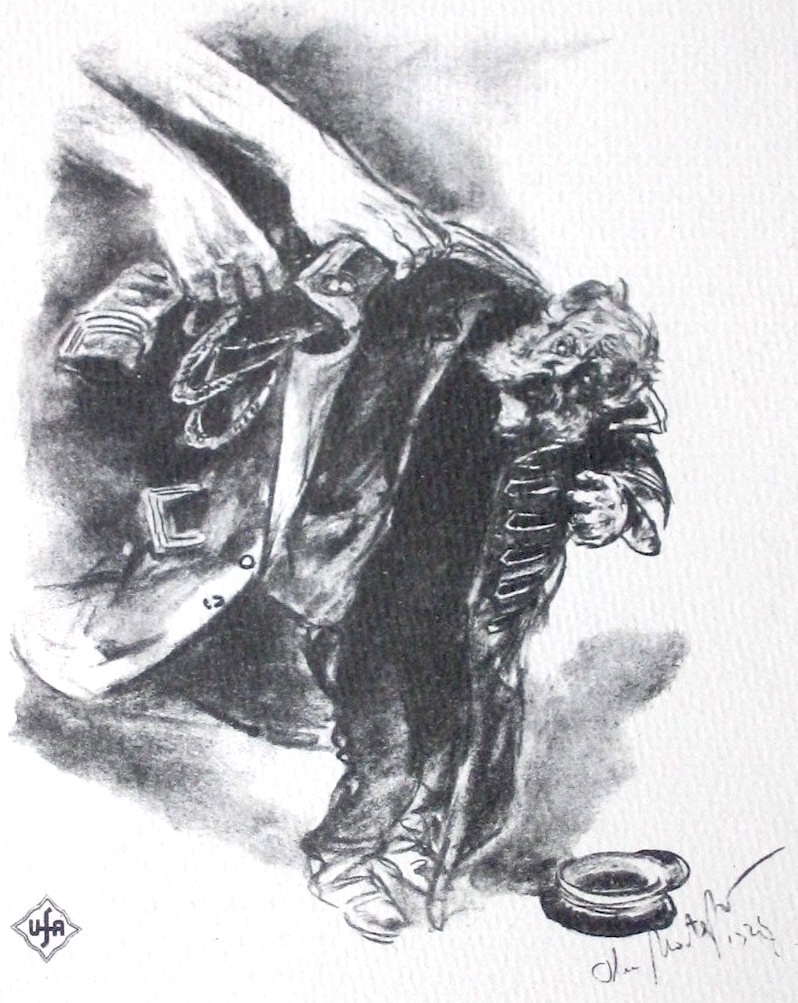
Theo Matejko’s dynamic and sensationalist style, which had a lasting influence on press graphic culture from the early 1920s onwards, was significantly influenced by cinematic views. The fact that he was commissioned by the UFA in 1924 to sketch the shooting of Murnau’s silent movie The Last Laugh (1924) underlines this connection. In this groundbreaking […]
-
Eccentric courses. A selection from the drawing book “You are very interested in arts.”
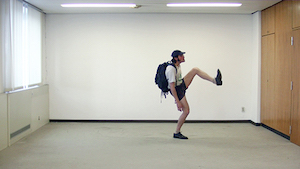
Frédéric Ehlers is an infinite number of authors who use the pen to explore the expanse of the sheet of paper and who cross the three-dimensional space with their rhythmically movements in an analogous manner. The selection of drawings is counteracted here by film stills of his Movement Research. “You are very interested in arts” […]
-
Nadar II: Journal pour rire 1848-51
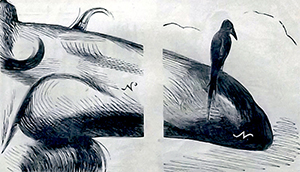
After Nadar had to cease his own magazine Revue Comique due to new censorship laws under the presidency of Louis Napoléon, he continued to work for Charles Philipon. In his quarterly pictorial review series for Philipon’s newly founded Journal pour rire, he also commented on the increasing severeness of police measures, which only shortly afterwards ended in […]
-
Nadar IV: Press graphics 1858 – 1905
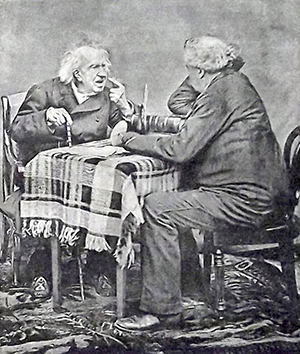
The popular Salon caricatural-series “Nadar Jury”, which he created in collaboration with the history painter Alfred Darjou for Charles Philipon’s new cartoon magazine “Journal amusant”, reveals Nadar’s critical attachment to the contemporary art scene. In 1863 his enthusiasm for aerial photography got a setback when his giant balloon “Le Géant” crashed on a field near […]
-
Félix Nadar III: Petit Journal Pour Rire 1856
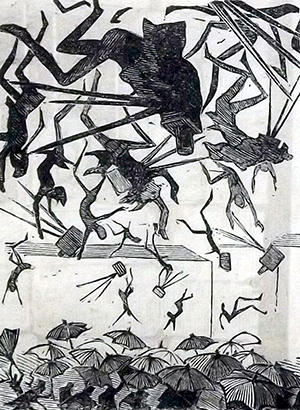
The photographic studio that Nadar ran since 1855 did not prevent him from continuing his press-graphic work. The following year, he supported his friend Charles Philipon in the publication of a smaller offshoot of “Journal pour rire” as a co-editor and chief cartoonist.
-
Nadar I: Revue Comique 1848 -1849
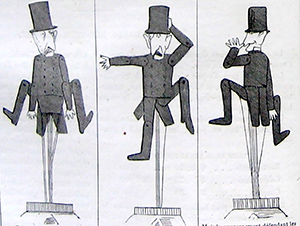
Before he became famous as a society photographer, a ballonist and a patron of the Impressionists, Gaspard-Félix Tournachon was known under his penname Nadar as one of the most inventive French cartoonists of the era. In the revolutionary year 1848 the republican activist started to work for the caricature journal “Le Charivari” of his friend […]
-
Deep Diving in the MePri (Internals)
High End Scan-Specialist Jürgen Seidel recently worked for weeks in the Institute´s collection to take pictures for a planned publication on the history of press graphics. Here are a few impressions: