-
The album of the 52 postillions (Anon., ca. 1840)
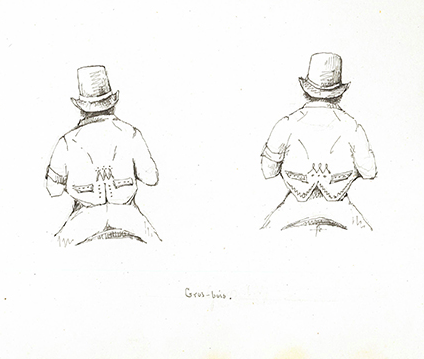
The drawer has depicted 52 postillons in this travel book. If you leaf through the travel book quickly, it behaves like a movement picture. Some postillons are slumped on their saddles, others stand up afterwards, straighten up on their stirrups, or sway in their saddles; the whips sometimes stand still, and later draw dissolute movements. […]
-
The Nuremberg Diary (A Father and Son Project)
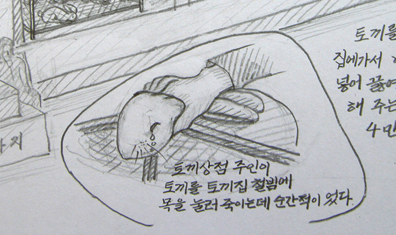
Haejun Jo has lived in Nuremberg between 2009 and 2011. He has gathered his observations and experiences, especially stories connected to Albrecht Dürer, and has written them down in the form of dialogues. These he sent to his father Donghwan Jo in Korea who translated them into a pictorial version.
-
The Cries of London; exhibiting several of the itinerant traders of antient and modern times. London 1839 , Posthumous Edition
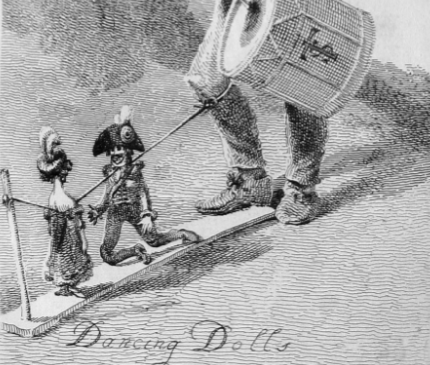
“Now as the Cries of London are sometimes the topic of conversation, the author of the present work is not without the hope of finding, amongst the more aged as well as juvenile readers, many to whom it may prove acceptable, inasmuch as it not only exhibits several Itinerant Traders and other persons of various […]
-
From inside the war / The Crowds
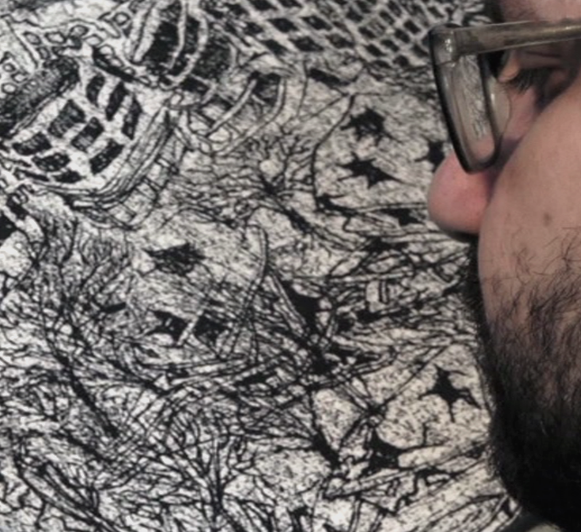
Hazem Alhamwi is both a visual artist and a film maker, author of the award winning documentary “From my Syrian Room”. The black and white drawings and paintings were made in Syria and vary in size. The coloured paintings were made in Berlin and their size is ca. 30 cm x 20 cm. The technique […]
-
Vagabondiana; or, Anecdotes of Mendicant Wanderers through the Streets of London; Drawn from the Life, London 1817
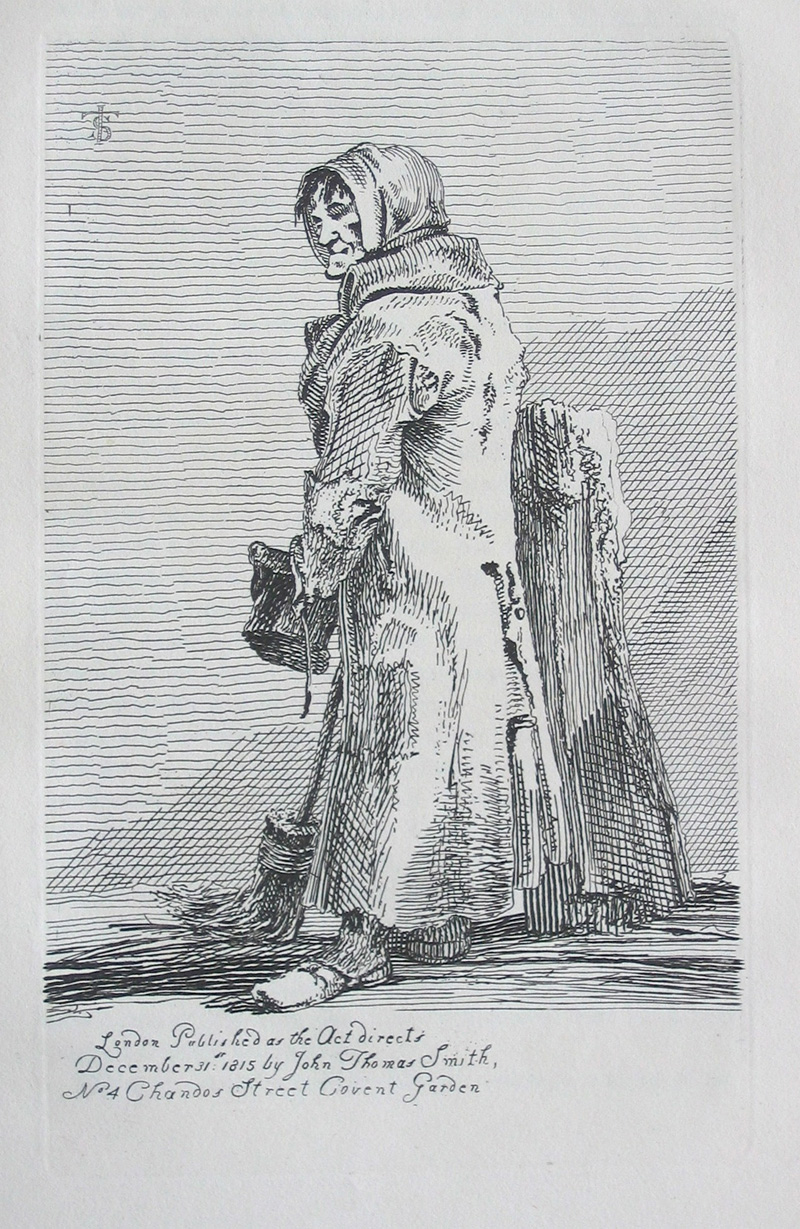
In the first decade of the 19th century the bourgeoisie felt increasingly pestered by the exploding army of beggars and pedlars. A royal commission of inquiry was appointed to remedy this, and in 1815 published a first Mendicity and Vagrancy Report. The commission´s recommendations resulted in countering the problem of homelessness and beggary with strict […]
-
Kupka´s T-error of Religions, 1904
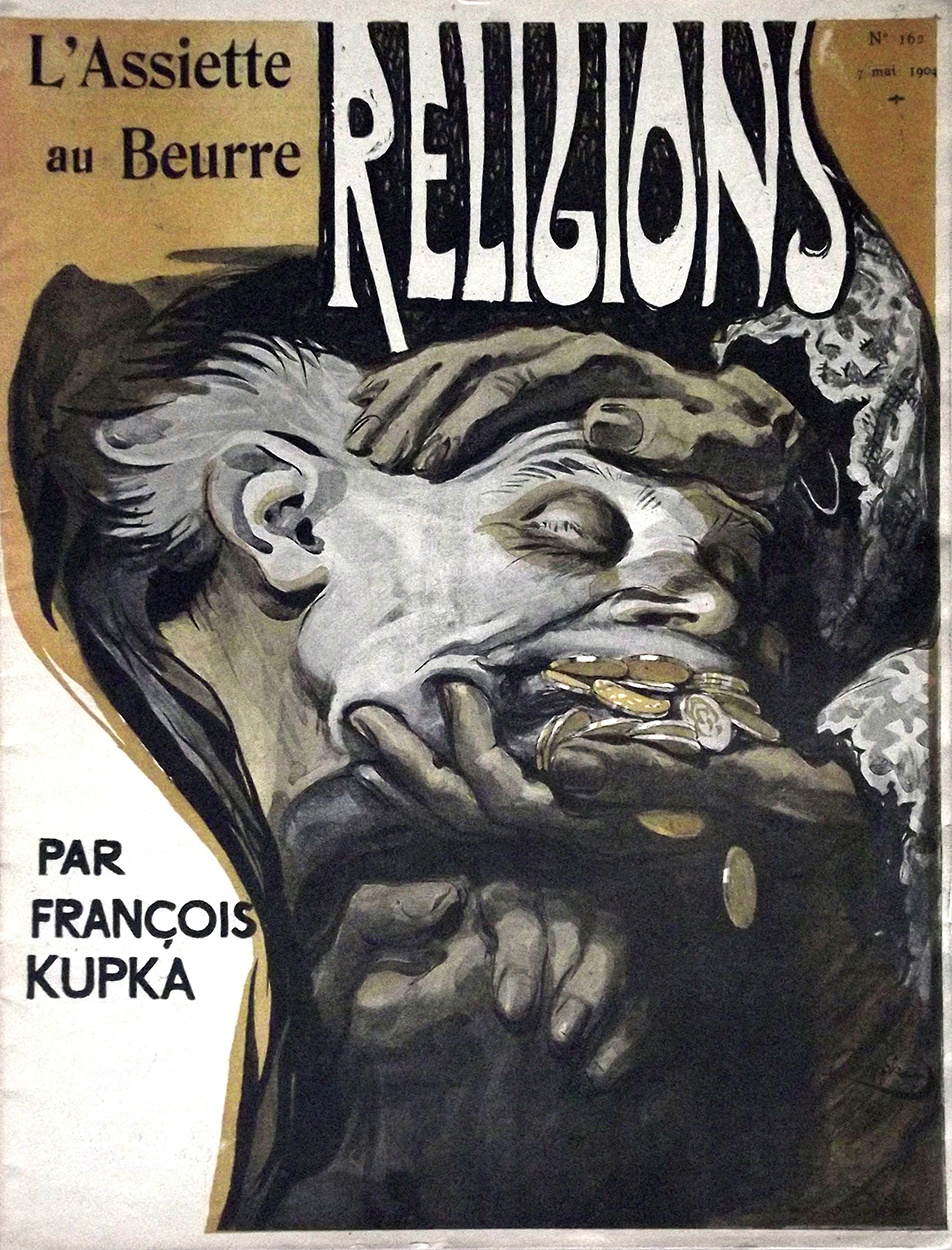
Zu Beginn des 20. Jahrhunderts publizierte der in Paris lebende tschechische Künstler Frantisek Kupka in Magazinen wie “Assiette au beurre”, “Le Canard Sauvage” und “Cocorico” einige furiose bildnerische Attacken gegen eine explosive Gemengelage aus ungehemmter Profitgier, Militarismus und Imperialismus, die überwiegend religiös legitimiert wurde. Seine kommentierte Bildfolge “Religions” war 1904 erschienen. Das Werk hat einen […]
-
Conflicts and Flames (Masters of Faits Divers – Painting VI)
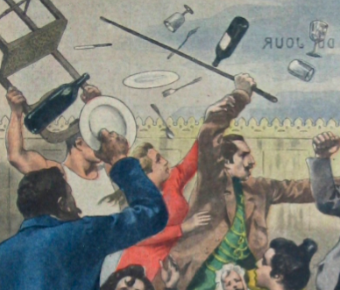
The depiction of social conflicts, of strikes, riots and mobs was one of the main subjects of special artists and faits divers-painters at the turn of the century. Some of them became masters of pictorial mass choreography and cataclysmic sceneries.
-
Slums in the outskirts of London, 1797
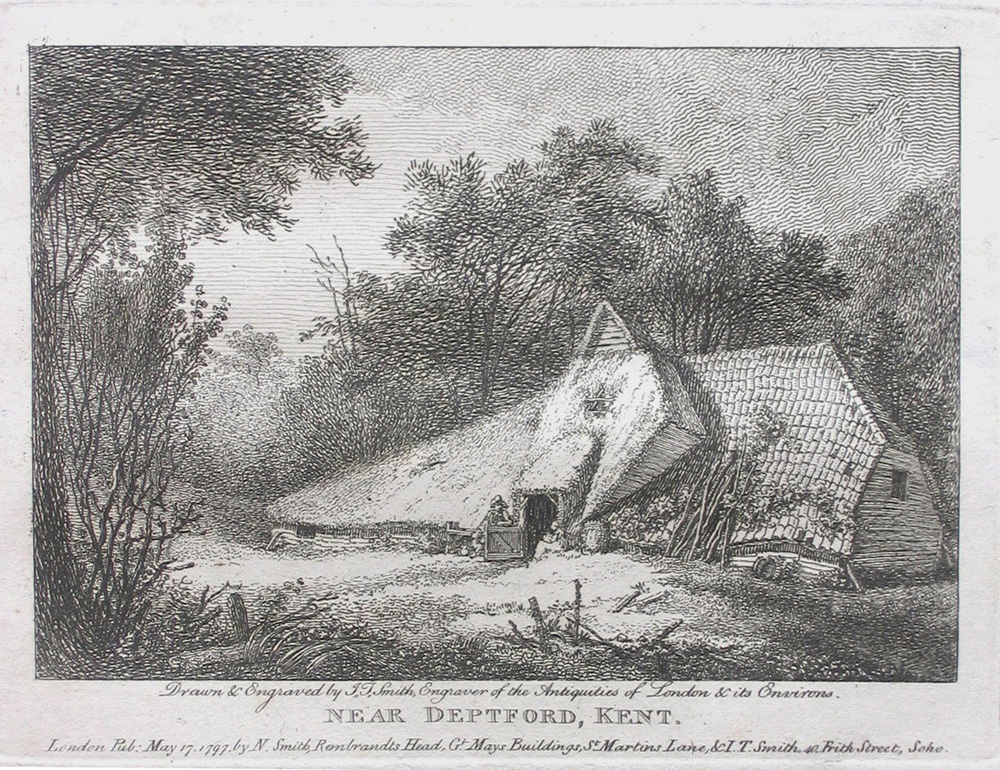
“Remarks on Rural Scenery” was created by John Thomas Smith with the support of his student John Constable. It consists of a sequence of twenty etchings that were all made “after nature” and depict the most various kinds of rural housings for the poor on the periphery of the exploding metropolis of London. The places […]
-
Katerfamily
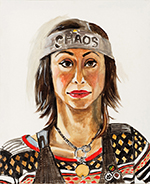
Henrieke Ribbe belongs to the very few real masters in the empathic art of portraiture. Her documentation on the Berlin club Kater Holzig was created in 2013/14. Together with her fiancée Jake Basker (aka Jake The Rapper), then a resident DJ at Kater Holzig, she came up with the idea to paint the people behind […]
-
Meppel, an odd year (Meppel, een raar jaar), ca. 1992 – 1995
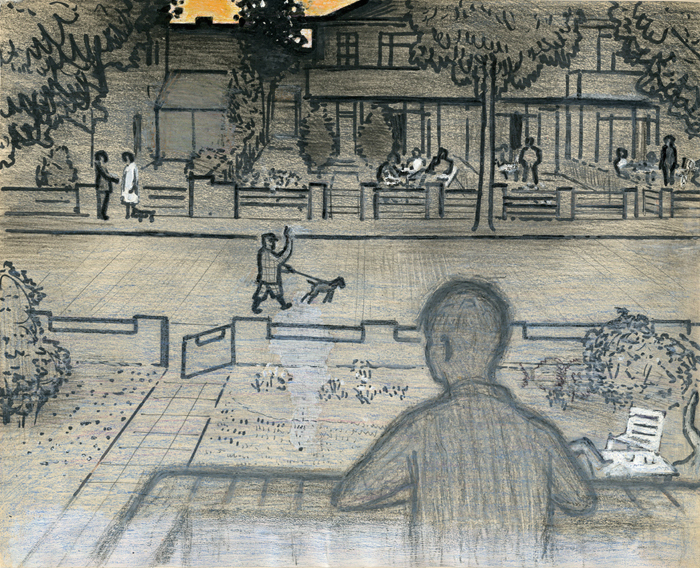
After his retirement as a drawing teacher in 1992 Jan Vegter (1927-2009) started to work intensely on the visualization of his memories of crucial periods of his life. To focuse his memory performance he decided to build detailed scale models of certain technical and topographic conditions. This amazing series was the first example of his […]