-
Fresnes – Observations of a collaborateur. Part II
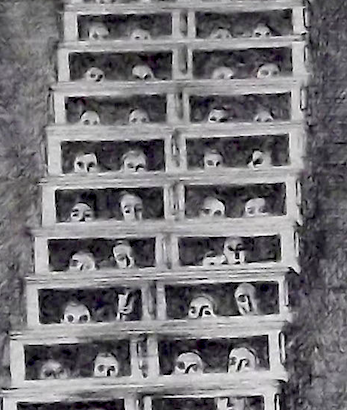
Rio was a pseudonym of Ralph Soupault (1904-1962), who became known in the 1920s as the leading cartoonist of the French nationalist reaction. Later on he joined the French fascist party PPF. Soupault was a supporter of the German occupying forces and became notorious for his anti-semitic propaganda. In 1946 he was arrested and sentenced […]
-
Fresnes – Observations of a Collaborateur. Part I
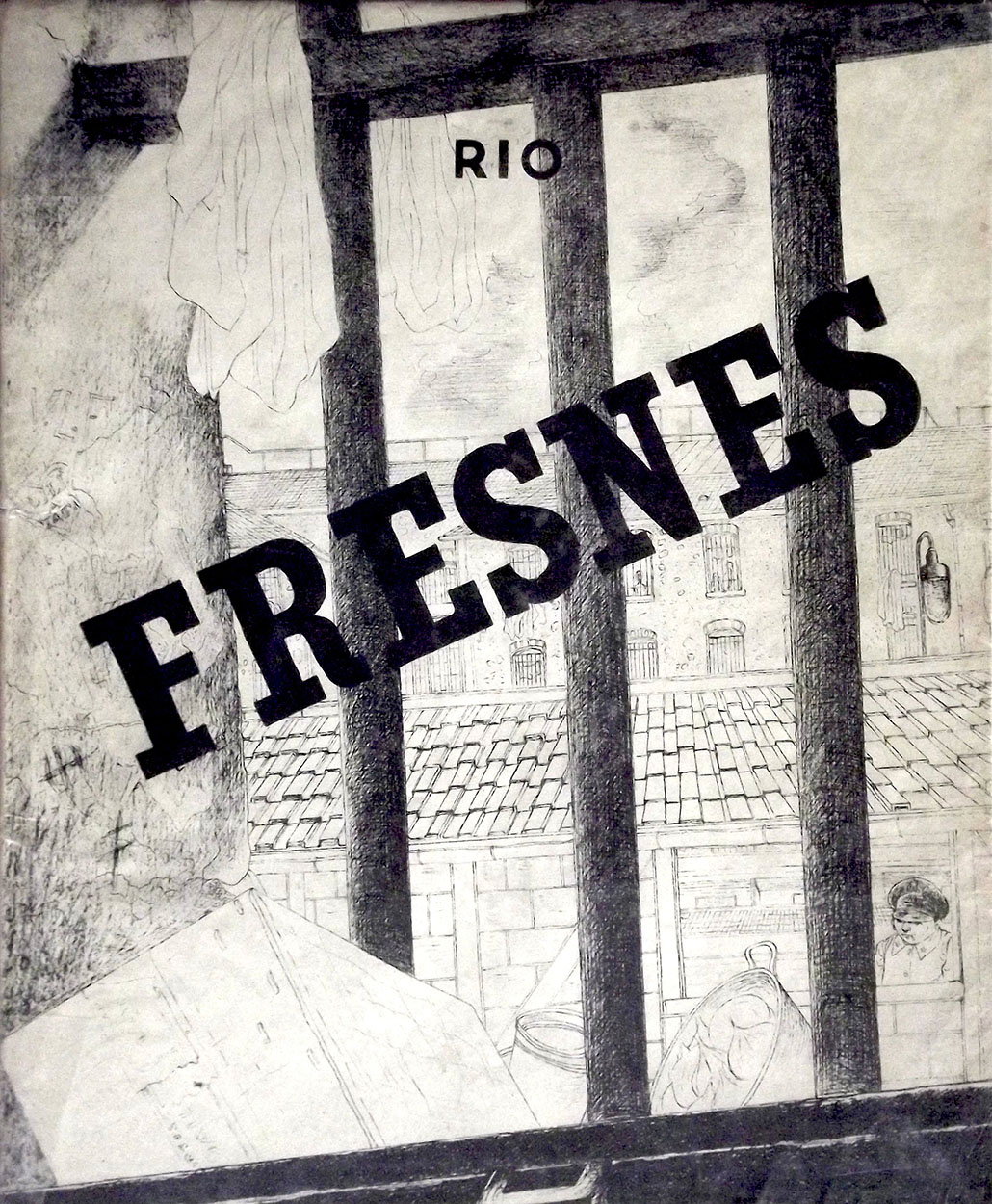
Rio was a pseudonym of Ralph Soupault (1904-1962), who became known in the 1920s as the leading cartoonist of the French nationalist reaction. Later on he joined the French fascist party PPF, which was led by the former communist activist Jacques Doriot. Like his friend, the groundbreaking novelist Celine, Soupault was a supporter of the […]
-
The Message of the Sandwich Man (Found by Tom Gretton)
In this lively street scene illustrator Richard Caton Woodville cached a reference to his collague Melton Prior, the most popular special artist of the era, and whose traditional dress code. Richard Caton Woodville,’ Shower in Piccadilly’, Illustrated London News, 18 September 1886 (Kensington and Chelsea Public Libraries, photo Tom Gretton) Richard Caton Woodville,’ Shower in […]
-
ROSTA / GPP : Pictorial Newsposter-Series of the Russian Avantgarde III , Moscow, 1921
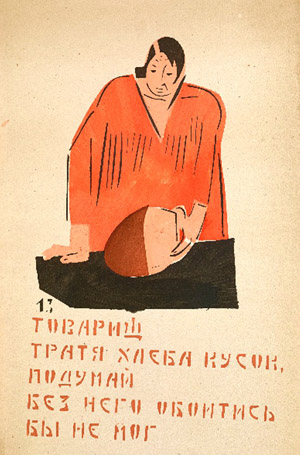
The campaign at ROSTA ended at the beginning of 1921 with the departure of the director of the news agency Platon Kerzhentsev. Afterwards, it was continued for one more year with a stricter conception in didactical terms under the patronage of Glavpolitprosvet (GPP), a newly founded educational institution of the Ministry of Cultural Affairs. The […]
-
ROSTA / GPP : Pictorial Newsposter-Series of the Russian Avantgarde II , Moscow, 1921
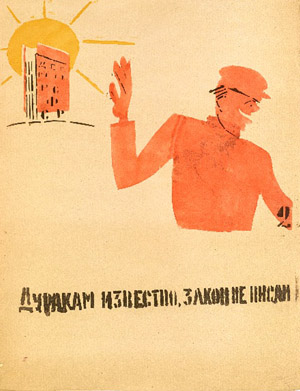
The ROSTA graphics were not only influenced by the already declining art of the classical avant-garde, but also by the then highly topical culture of American daily strips. Communism and comics were not oppositional camps in the pre-Disney era, quite to the contrary. Particularly the windows of Mikhail Cheremnykh reveal a conspicuous stylistic proximity to […]
-
ROSTA / GPP : Pictorial Newsposter-Series of the Russian Avantgarde I , Moscow, 1920 / 1921
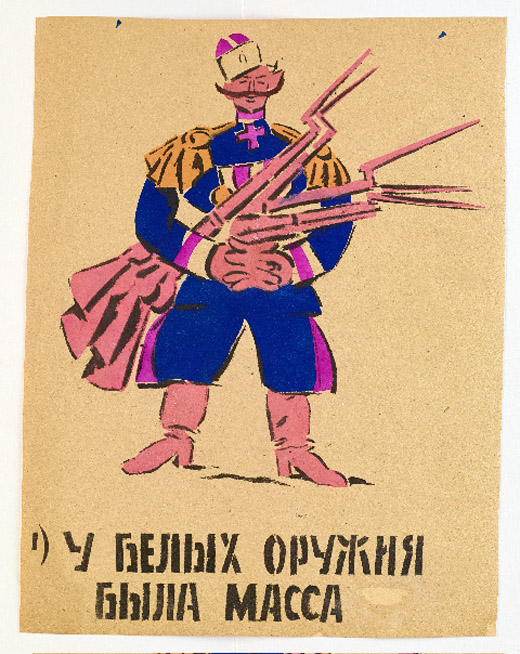
In February 1919, caricaturist Mikhail Cheremnykh started an artistic campaign in an empty shop window with a visually designed report of the Bolshevist news agency ROSTA. Shortely thereafter the initiative was taken up by the popular poet Vladimir Mayakovsky. He selected most of the news items and prepared them for pictorial realisation. “The field of […]
-
Urban Apaches: Torture, Blood & Thunder (Masters of Faits Divers – Painting IV)
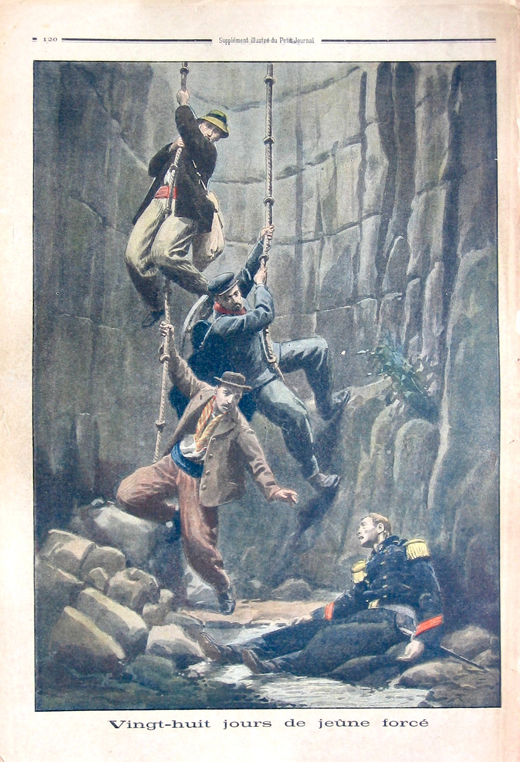
“Les Apaches” can be considered as an early manifestation of rebellious youth culture in Paris. They were organized in street gangs with special idioms and dress codes very similar to those of the London costermonger-subculture. In 1907 “Le Petit Journal” called the ruffian Apaches “the sore of Paris. More than 30.000 blighters standing against 8.000 […]
-
Georg Winter´s UCS moving pictures:: Losing Horses. – Scene 3: The Haus zur Trapp in Pulheim
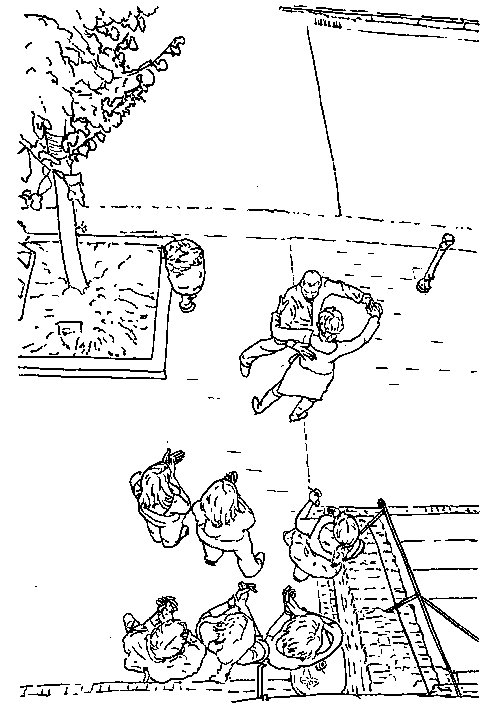
Shooting finds its climax andcompletion on the Stommeln village green. In the remake of the novel, Haus zur Trapp, built in 1785 and in reality now a café and hotel, serves as the inn Don Quixote believes is a castle. The fair maidens standing at the door are actually “two young women, girls of the […]
-
Georg Winter´s UCS moving pictures:: Losing Horses. – Scene 2: The former drive-in theater in Pulheim
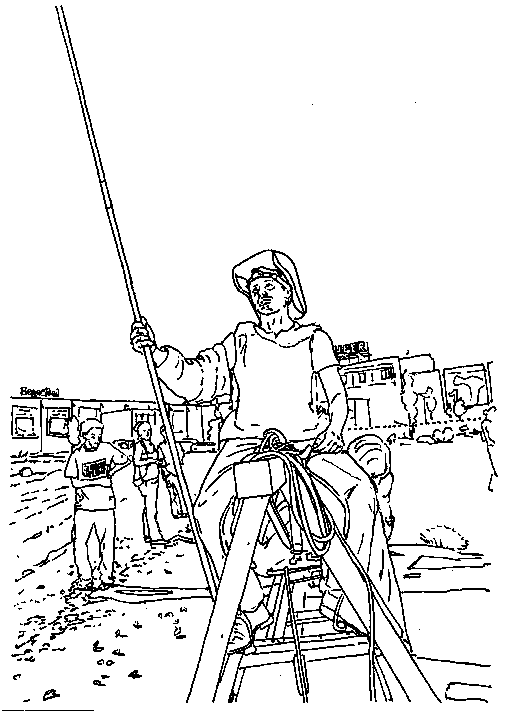
A German/Hungarian Film, UCS Self Organizing CinemaDirection: Vera Poros, Kerstin KachelmannScreenplay: Georg WinterBased on the novel Don Quixoteby Miguel de Cervantes SaavedraShot in Ukiyo Real Time for the first time with “UCS Passive Acting” by Johnny Depp andChristopher Lee (both of whom were requested), reversed stunts at three locations: theStommeln windmill, the former drive-in theater […]
-
Georg Winter´s UCS moving pictures:: Losing Horses. – Scene 1: The Stommeln windmill
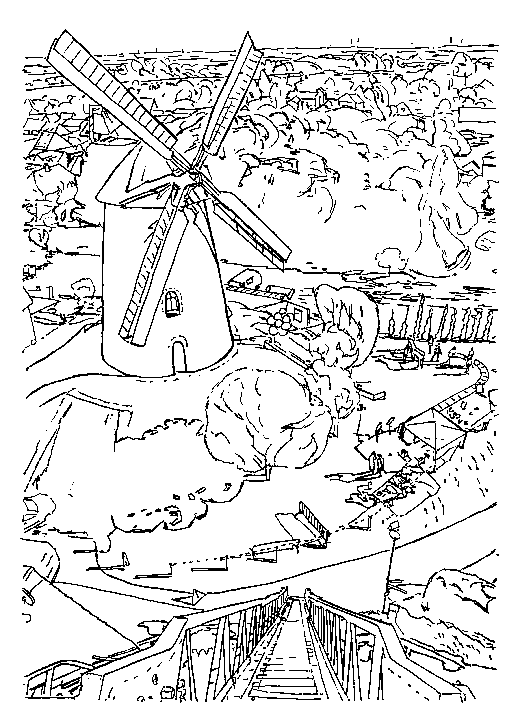
In September 2005, the German-Hungarian film production “Losing Horses / Veszítö Lovak” by Ukiyo Camera Systems moving pictures was shot at locations in Pulheim and Stommeln, not far from Cologne. Georg Winter´s Real-Time Recording Method attempted to create filmic situations (Self Organizing Cinema) based on the construction of the reality of “Don Quixote” by Miguel […]